Recommended Architectural Aluminum Entry Systems
Explore our certified exterior entrance door portfolio, featuring thermal break multi-chamber profiles, soundproof insulating glass units, and heavy-duty security hardware.
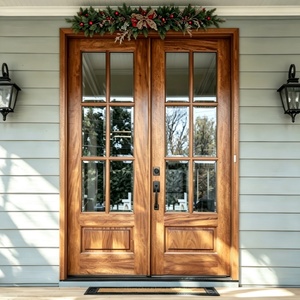
Direct Factory Modern Hinged Aluminum Solid Wood Doors Soundproof Triple Tempered Glass Custom Home Front Casement Door
Combines structural 6063-T5 aluminum framing with solid wood composite facings and triple-glazed soundproof tempered glass for acoustic comfort.
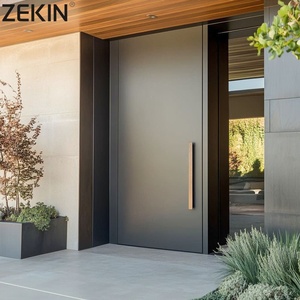
ZEKIN Outdoor Back Painted Glass Anti-theft Exterior Security Aluminum Cast Pivot Door Sound Insulation Front Entry Main Doors
Luxury architectural pivot entrance door featuring back-painted safety glass panels, heavy-duty cast aluminum structure, and anti-burglary multi-point locking.
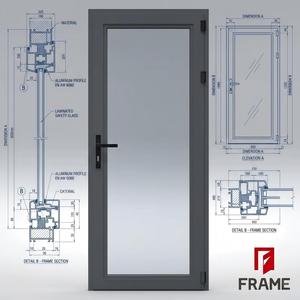
High Quality Aluminium Door Single Double Glass Indoor Single Casement Swing External Or Internal Doors
Precision-engineered single and double swing doors suitable for high-traffic exterior entrances and interior dividers, offering weatherproofing EPDM seals.
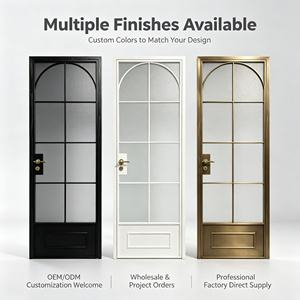
Wholesale Modern French Customized Tempered Glass Aluminum Slim Frame Glass Divider Entry Door
Ultra-slim sightline French aluminum entry door utilizing high-transmittance tempered glass panels, maximizing natural daylight while keeping frame strength.
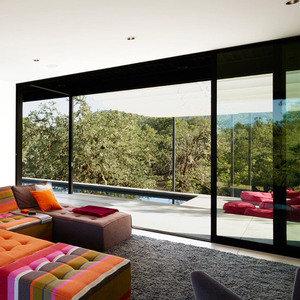
APRO Modern Aluminum Door Sliding Glass Patio Door with Bifold Swing Folding Design
Heavy-duty bifold folding entry and patio door system with heavy-load bottom rollers, insulated glass units, and seamless wide-span opening aesthetics.
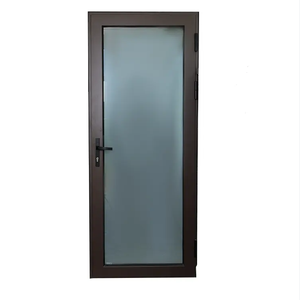
RG50 Casement Door Soundproofing Double Tempered Glass Aluminum Doors Slim Open Door For Home
RG50 architectural casement series featuring dual-seal EPDM gaskets, argon gas-filled double glazing, and slim profile frames for quiet living spaces.
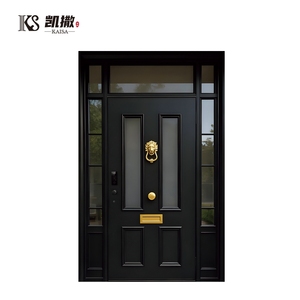
Customized Casement Aluminium Alloy Glass Door Exterior Security Entrance Steel Main Doors
Reinforced aluminum exterior main entrance door with integrated security core, multi-point deadlock mechanisms, and custom powder-coated finishes.
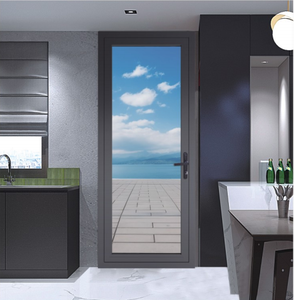
RG60 Modern Style Double Glass Main Front Door Aluminum Alloy Casement Hot Sale Sound Insulation Side Opening Finished Surface
Premium RG60 heavy-duty casement door with multi-chamber thermal insulation profiles, high structural wind resistance, and premium surface treatments.
CE Certification Compliance & Structural Engineering Standards
A rigorous examination of EN 14351-1 testing protocols, thermal transmittance calculations, and material metallurgy for high-performance architectural door exports.
EN 14351-1 CE Standard Compliance
Our aluminum glass entry doors undergo full harmonized European testing for air permeability (EN 12207 Class 4), watertightness (EN 12208 Class 9A), and wind load resistance (EN 12210 Class C5 / up to 5000 Pa wind pressures), ensuring seamless regulatory compliance across all EU and global entry ports.
Metallurgical Rigidity (6063-T5)
We utilize primary 6063-T5 architectural aluminum profiles with controlled magnesium (0.45–0.9%) and silicon (0.2–0.6%) ratios. Yield strength exceeds 110 MPa and ultimate tensile strength reaches ≥ 160 MPa, preventing structural frame deflection even on 4-meter tall pivot leaves.
Acoustic Damping & Thermal Barrier
By integrating Polyamide PA66-GF25 reinforced thermal breaks with double/triple argon-filled Low-E insulated glass units (IGU), our door assemblies achieve overall thermal U-values as low as 1.1 W/m²K and sound reduction ratings of Rw 42 dB / STC 43.
Information Gain Insight: The Structural Mechanics of Aluminum Door Thermal Breaks
In thermal break aluminum door engineering, performance depends on the thermal barrier profile's width and composition. Standard non-thermal aluminum profiles act as direct thermal conductors (U-value > 5.8 W/m²K). By inserting precision-engineered PA66-GF25 polyamide strips (25% glass fiber reinforced for mechanical shear strength), we physically decouple the exterior aluminum skin from the interior extrusion matrix.
This barrier reduces conductive heat gain/loss by up to 78%, eliminating interior frame condensation in sub-zero winters while keeping surface temperature stability across extreme humidity environments.
Next-Generation Technological Trends in Aluminum Glass Entry Doors
How advancements in material science, surface finishing, and micro-electronics are redefining the global entrance architectural market.
1. Fully-Concealed Heavy Offset Pivot Hardware
Traditional butt hinges are increasingly replaced by floor-and-head offset pivot mechanisms capable of handling sash weights up to 500 kg (1100 lbs). Modern hydraulic pivots incorporate multi-angle hold-open locks, soft-close dampening, and 3D alignment controls for seamless architectural entrance integration.
2. Handle-Integrated Biometric Smart Locking Systems
Access control technology has moved beyond bulky surface locks. Future-ready aluminum entry doors integrate semiconductor fingerprint sensors, 3D structured-light facial recognition cameras, and encrypted RFID modules directly into vertical pull handles, powered by internal rechargeable lithium battery packs or wired PoE power delivery.
3. PVDF & Architectural Fluorocarbon Coatings
To resist coastal salt-fog corrosion (C5-M atmospheric rating), surface finishing is advancing to triple-coat PVDF (Polyvinylidene Fluoride) resins compliant with AAMA 2605 specifications. These coatings guarantee color retention and chalking resistance for over 30 years under intense UV radiation.
4. 5-Axis CNC Precision Panel Engraving
Replacing traditional stamped sheet metal, modern entry doors feature solid aluminum panels (3.0mm–6.0mm thickness) precision carved via 5-axis CNC machining centers. This allows intricate geometric patterns, textured relief surfaces, and flush-integrated ceramic or wood-veneer inlays.
5. High-Performance Insulated Glazing Units (IGU)
Glazed doors now utilize laminated toughened glass composites (e.g., 6mm Low-E + 12Argon + 6mm Clear + 1.52PVB + 6mm Clear) incorporating warm-edge composite spacers (Swisspacer) to minimize thermal bridging at glass perimeters and meet strict hurricane impact standards (ASTM E1996 / TAS 201).
Strategic Sourcing & Procurement Trends (2025–2030 Horizon)
Key economic, regulatory, and supply chain shifts that global B2B door buyers, importers, and estate developers must incorporate into their procurement playbooks.
Decarbonization & Circular Aluminum Procurement
Global architectural specifications increasingly require Environmental Product Declarations (EPD) and low-carbon primary aluminum billets produced via hydroelectric smelting. Sourcing certified recycled aluminum profiles (with recycled content ≥ 75%) significantly reduces Scope 3 embodied carbon emissions, ensuring project compliance with LEED v4.1, BREEAM, and EU Carbon Border Adjustment Mechanism (CBAM) regulations.
Unitized Prefabrication & Rapid Assembly Systems
Labor shortages in Europe, North America, and Oceania are driving demand for factory-assembled, plug-and-play door systems. Importers prefer pre-hung aluminum door frames with factory-installed lock mortises, pre-wired smart lock harnesses, and drop-down acoustic bottom seals, cutting on-site installation times by over 60% compared to traditional field-assembled doors.
Single-Source Factory Direct Integration
Subcontracting extrusion, powder coating, CNC machining, and glass unit assembly across multiple vendors creates quality fragmentation and lead-time delays. Leading B2B buyers now partner exclusively with fully integrated manufacturing plants that handle raw profile billet extrusion, automated chemical pre-treatment, anodizing/coating, and final assembly under one unified quality management system.
Strict OEM/ODM Engineering Protocol Standardizations
Custom project sourcing demands rigorous engineering documentation prior to mass manufacturing. Global procurement standards require factories to issue 3D CAD parametric models, structural wind-load calculation reports, and physical sample swatches before production sign-off, mitigating expensive dimensional mismatches during site installation.
Architectural Entry Door Material Specification Matrix
An objective engineering evaluation comparing CE-Certified Aluminum Glass Systems against legacy building materials across structural and operational criteria.
| Performance Parameter | CE Aluminum Glass System | Solid Hardwood | Galvanized Steel Armored | Standard PVC / Vinyl |
|---|---|---|---|---|
| Structural Rigidity & Span | Very High (Up to 4m height) | Moderate (Prone to warping) | High (Heavy weight penalty) | Low (Requires steel reinforcement) |
| Corrosion & Rust Resistance | Superior (PVDF / Anodized) | Poor (Moisture rot risk) | Moderate (Rusts if coated edge chips) | High (Chemical inertness) |
| Thermal Insulation (U-Value) | 1.1 – 1.6 W/m²K (Thermal Break) | 1.4 – 1.8 W/m²K | 2.0 – 2.8 W/m²K | 1.3 – 1.7 W/m²K |
| Acoustic Rating (Rw Sound Damping) | Rw 38 – 43 dB | Rw 28 – 32 dB | Rw 32 – 36 dB | Rw 30 – 34 dB |
| Burglary Security (EN 1627) | RC2 / RC3 Rating Compatible | RC1 / RC2 Rating | RC3 / RC4 High Security | RC1 Rating |
| Maintenance & Service Life | Low Maintenance (30+ Years) | High (Re-varnish every 2 yrs) | Moderate (Touch-up paint needed) | Moderate (Yellows under UV) |
| Recyclability & Circularity | 100% Infinitely Recyclable | Biodegradable (If untreated) | 100% Recyclable | Difficult (Composite landfill burden) |
Foshan Aludex Manufacturing Infrastructure & Technical Authority
Established in 2004 in Foshan, Guangdong—China's global aluminum manufacturing capital—Foshan Aludex Doors & Windows Co., Ltd. operates two advanced manufacturing bases and a dedicated R&D center dedicated to architectural entrance innovations.
We manage an end-to-end production ecosystem: from primary aluminum profile extrusion, automated surface pre-treatment, electro-powder coating, and 5-axis CNC panel machining to final glass unit assembly and export crating. This total chain control allows us to enforce strict quality tolerances, deliver stable lead times, and offer complete OEM/ODM customization for B2B importers, builders, and high-end residential projects globally.
- 100% In-House Extrusion using 6063-T5 High-Purity Aluminum Billets
- Certified Quality Management Systems adhering to CE EN 14351-1 and ISO9001
- Fully Customized Engineering Support: BIM/CAD Drawings, Color Swatches, & Mockup Testing

B2B Technical Sourcing & Engineering FAQ
In-depth solutions to technical compliance, architectural specifications, logistics, and warranty protocols commonly queried by international buyers.
How does CE EN 14351-1 certification protect international B2B importers?
CE certification under EN 14351-1 ensures that external pedestrian doorsets comply with mandatory European safety, structural, and thermal requirements. It provides certified test data for air permeability, water tightness, structural wind resistance, thermal transmittance (U-value), and load-bearing capacity of safety devices. This documentation simplifies customs clearance in EU countries and provides legal quality assurance for building contractors.
What structural aluminum alloy grades are utilized, and how do they perform in coastal salt-spray environments?
We strictly utilize primary 6063-T5 aluminum alloy extrusions engineered for architectural door applications. For coastal regions with high atmospheric salinity (C5-M environment), frames undergo chromate-free chemical conversion pre-treatment followed by AkzoNobel or Qualicoat Class 2 / Class 3 PVDF fluorocarbon coatings. This prevents oxide pitting, filiform corrosion, and finish degradation even after 3,000 hours of continuous neutral salt spray (ASTM B117) testing.
What glass unit (IGU) options are available for soundproofing and thermal performance?
Our custom glass options include double and triple-glazed Insulated Glass Units (IGU) with argon gas fill (90%+ concentration), Low-Emissivity coatings, and warm-edge composite spacers. Typical configurations include 6mm Low-E + 12A + 6mm Clear (Double) or 6mm Low-E + 12A + 6mm Clear + 12A + 6mm Toughened (Triple). For high acoustic damping requirements (STC > 42dB), we incorporate multi-layer PVB acoustic laminated glass panels.
How are oversized aluminum pivot doors engineered to prevent long-term sash sagging?
Oversized pivot doors (up to 2500mm wide and 4000mm high) incorporate internal high-tensile steel tensioning rods embedded within the aluminum extrusion core. These rods allow micro-calibration of sash straightness. Furthermore, load-bearing weight is transferred directly to the floor-mounted hydraulic pivot structure rated for up to 500 kg, preventing structural stress on the head frame and ensuring smooth, effortless manual operation over 200,000 open/close cycles.
Can Aludex entry doors integrate with commercial smart home and access control systems?
Yes. Our doors feature pre-engineered wiring conduits, concealed mortise routing, and power transfer hinges compatible with global access control systems. Integrated smart locks support biometric fingerprint, 3D facial recognition, encrypted passcode, IC card, mobile app (Tuya / TT Lock), and RS485 / dry-contact relay integration for building management systems (BMS).
What packaging and export logistics protection protocols are implemented for sea freight?
Every door assembly undergoes a multi-layer protective packaging sequence: (1) Surface protective film on all aluminum profiles and glass; (2) Corner guards and high-density PE foam wrapping; (3) Vacuum-sealed moisture barrier bag; (4) Custom-built fully enclosed fumigated plywood crates with internal foam cushioning. Crates feature bottom pallet bases designed for forklift loading and unloading without damaging fragile door edges.
What CAD, BIM, and engineering support is provided prior to manufacturing sign-off?
Upon receiving rough opening dimensions or project architectural drawings, our engineering department prepares comprehensive 2D CAD shop drawings detailing frame cross-sections, structural anchors, wall interface sealing, glass specs, and hardware placement. For large project orders, 3D parametric BIM models (Revit format) and structural calculation reports are provided for architectural sign-off.
What are the production lead times, sample lead times, and factory warranty terms?
Standard sample color swatches and corner structural profiles are prepared within 1–4 working days. Full door sample units require 15–20 days. Bulk production orders typically range between 25 and 40 working days depending on finish complexity and hardware specs. All aluminum structural frames are backed by a 10-year warranty, hardware components carry a 3-to-5 year replacement warranty, and PVDF surface finishes carry a 15-to-25 year weatherability guarantee.
Start Your Custom Architectural Door Project Today
Connect directly with our engineering team in Foshan to request CAD shop drawings, factory-direct wholesale quotations, CE documentation, or physical finish samples.