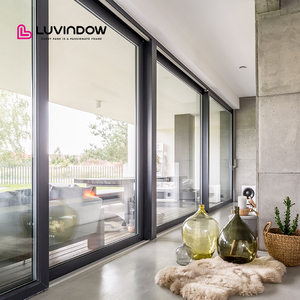
Hurricane Impact & Thermal
Engineered for extreme structural resistance, weather tightness, and architectural customization. Direct supply from Foshan manufacturing headquarters.
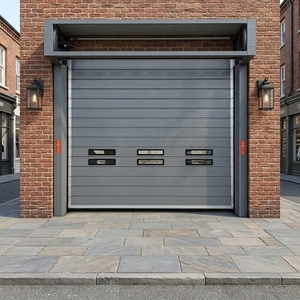
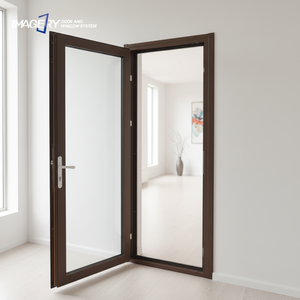
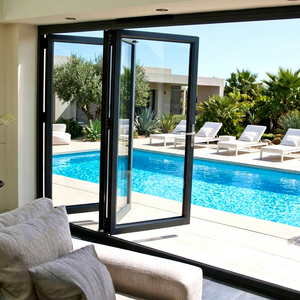
In modern commercial architecture and high-end residential real estate, securing building envelopes requires rigorous empirical validation. Modern commercial entrance doors are no longer evaluated solely on visual appeal or acoustic dampening; structural physical security certified under European Norms (EN 1627 through EN 1630) has become mandatory across European Union member states and key global procurement markets.
When evaluating CE certified burglar resistant aluminum door factories, technical auditors must look beyond basic mill-finish specifications. European CE marking guarantees compliance with the Construction Products Regulation (CPR No 305/2011). Under this framework, anti-burglary performance is categorized into distinct Resistance Classes (RC), determining a door's structural resilience against opportunistic break-ins, mechanical lever forces, dynamic impact, and targeted attacks with heavy-duty forced-entry tools.
Measures physical deflection under concentrated hydraulic pressure. Test loads ranging from 1.5 kN up to 15 kN are applied directly to locking points, corner joints, and frame-leaf glazing boundaries to ensure zero structural displacement or latch disengagement.
Evaluates resistance against high-energy kinetic impacts. A 50 kg steel-sheathed twin-tire pendulum mass drops from calibrated heights against glass panes, profile junctions, and lock casings to simulate physical shoulder strikes and battering attempts.
Simulates direct attack vectors by experienced burglars using targeted toolsets—including heavy crowbars, steel wedges, pipe wrenches, claw hammers, and cordless rotary drills—testing structural survival over designated resistance times (3 to 10 minutes).
Achieving certified burglar resistance without creating prohibitively heavy door leaves requires specialized extrusion metallurgy. Leading aluminum door factories utilize high-grade 6063-T5 and 6061-T6 aluminum alloys. These profiles undergo precision heat treatment and artificial aging to achieve a tensile strength exceeding 185 MPa and yield strength above 145 MPa.
Structural integrity is heavily dependent on profile wall thickness and multi-chamber design. Unlike standard residential window profiles with wall thicknesses of 1.4mm, commercial CE certified burglar-resistant entrance doors feature heavy-duty structural outer walls ranging from 2.0mm to 3.5mm. Internal structural ribbing prevents profile twisting when subjected to intense prying forces.
A major challenge in physical security door engineering is maintaining high thermal insulation while guaranteeing physical strength. Modern thermal break security doors incorporate 25% glass-fiber reinforced Polyamide (PA66 GF25) extrusion bars. These thermal barriers separate inner and outer aluminum skins, reducing heat transmission coefficients (U-values) down to 1.2 W/m²K while preserving shear resistance under mechanical force.
A security door frame is only as strong as its deadlocking mechanics. Standard single-point latch systems fail rapidly under manual attack testing (EN 1630). CE certified RC3 and RC4 aluminum entrance doors manufactured by premier factories incorporate integrated multi-point locking gear:
The matrix below details key engineering benchmarks evaluated during technical factory audits and architectural procurement reviews:
| Performance Specification | Standard Commercial Aluminum Door | Conventional Steel Armored Door | CE Certified RC3 Thermal Break Door |
|---|---|---|---|
| EN 1627 Resistance Class | Uncertified / RC1N | RC2 to RC3 | Certified RC3 / RC4 |
| Main Profile Material | Standard 6063-T5 (1.4mm) | Galvanized Sheet Steel | High-Tensile 6063-T5 (2.5mm–3.5mm) |
| Thermal Insulation (U-Value) | > 3.5 W/m²K (Poor) | 2.2 to 2.8 W/m²K | 1.2 to 1.6 W/m²K (Superior PA66 Break) |
| Corrosion & Weathering | Moderate (Powder Coated) | High Risk (Rust at Welds & Edges) | Zero Corrosion (Anodized / Fluorocarbon) |
| Locking System Integration | Single Latch / Standard Lock | Multi-Point Steel Bolts | Multi-Point Hook Bolts + Smart Biometrics |
| Acoustic Damping Rating | 25 dB – 28 dB | 30 dB – 35 dB | 38 dB – 44 dB (Double EPDM Seals) |
As international real estate developers and commercial builders update procurement guidelines, the demand for high-performance aluminum doors is shifting rapidly. Three primary market drivers dictate modern B2B sourcing decisions:
Aluminum is infinitely recyclable without loss of mechanical integrity, retaining 95% of its structural value. Global builders aiming for LEED, BREEAM, or DGNB green building certifications increasingly prefer extruded aluminum structural entrances over non-recyclable composite or rot-prone timber doors.
Modern commercial installations demand seamless integration between mechanical multi-point locks and electronic access control. Modern factories embed concealed motor-driven locks, encrypted RFID receivers, 3D facial recognition scanners, and fingerprint readers directly inside machined pull handles—maintaining physical RC3 break-in resistance while delivering contactless entry.
Foshan, Guangdong stands as the world's epicenter for advanced aluminum profile extrusion, surface treatment technology, and custom door manufacturing. Sourcing directly from an established Foshan manufacturer provides global buyers with unmatched advantages: complete supply chain control, rapid prototype turnaround, low total cost of ownership (TCO), and fully customizable shop drawings.
Direct from Foshan, China — Architectural-grade security doors engineered for international distributors, builders, and villa developers.
Founded in 2004, Foshan Aludex Doors & Windows Co., Ltd. operates an expansive 30,000 square meter manufacturing facility staffed by over 300 skilled technicians, engineers, and quality assurance inspectors. With two specialized production bases and a dedicated R&D center, Aludex has established itself as an authoritative leader in aluminum door manufacturing.
Unlike trading companies or local assembly workshops, Aludex manages the entire production cycle in-house: profile extrusion, precision surface pre-treatment, advanced powder coating, wood-grain thermal transfer, multi-axis CNC panel carving, glass assembly, and final testing. This complete operational footprint guarantees stringent quality control, consistent finish quality, and competitive factory-direct pricing.
From raw 6063-T5 aluminum ingot extrusion to final multi-point lock fitting, every manufacturing stage occurs inside our Foshan plant, guaranteeing full traceability and delivery precision.
We turn architectural drawings into reality. Custom opening sizes, profile depths (T65, T85, T93, D100), customized glass specs, and branded packaging for global importers.
International buyers and third-party inspectors (SGS, TUV) are welcomed. Every order undergoes 100% pre-shipment assembly and water-tightness testing before export crating.
In-depth answers regarding CE certification, physical security testing, order lead times, and OEM customization.
CE compliance for anti-burglary doors requires official laboratory test reports executed under European standards EN 1627, EN 1628, EN 1629, and EN 1630 by a recognized Notified Body. The factory must supply a Declaration of Performance (DoP) detailing the resistance class achieved (e.g., RC2, RC3, or RC4), air permeability (EN 12207), water tightness (EN 12208), wind load resistance (EN 12210), and dangerous substance release reports.
RC2: Protects against opportunistic burglars using basic hand tools (screwdrivers, pliers, wedges) with a resistance time of 3 minutes.
RC3: Protects against experienced break-in attempts using heavy crowbars, steel pin punches, and mechanical drills with a resistance time of 5 minutes. (Recommended for luxury villas and retail store fronts).
RC4: Shields against organized attacks using heavy-duty tools including sledgehammers, axes, cordless drills, and angle grinders with a 10-minute resistance time. (Recommended for high-value commercial vaults, banks, and secure server rooms).
Thermal breaks utilize Polyamide strips (PA66 GF25) inserted between outer and inner aluminum profile chambers. In high-quality security doors, these strips are structurally interlocking and glass-fiber reinforced, delivering exceptionally high transverse shear strength. This ensures that the thermal break does not weaken under hydraulic prying or impact forces during EN 1628 and EN 1629 testing, while simultaneously lowering U-values down to 1.2–1.6 W/m²K.
Yes. Contemporary aluminum door engineering allows handle-integrated smart locks (fingerprint scanners, encrypted RFID keycards, biometric face recognition) and electric motor deadbolts to be recessed directly into hardened profile channels. Anti-drill manganese shielding plates are placed around electronic control boards and locking solenoids to prevent physical override or electrical tampering.
Standard production for OEM containerized orders takes 20 to 40 business days depending on custom profile extrusions and hardware specifications. Every door leaf and frame unit is wrapped in protective PE anti-scratch film, corner-shielded with high-density EPE foam, and encased inside fully sealed IPPC-stamped plywood export crates to eliminate shipping moisture and transit vibration damage.
Buyers should record unboxing photos and video within 48 hours of shipment arrival. For damage attributable to ocean freight or factory packaging failure, our warranty protocol covers immediate insurance claim processing and prioritized re-production of replacement profiles, glass units, or hardware components shipped via express freight.
To prepare shop drawings and formal pricing, our engineering team requires: rough opening dimensions (width x height), opening style (pivot, single swing, double entrance, or bi-folding), target resistance class (RC2/RC3/RC4), glass specification (double tempered or laminated impact glass), frame color finish (powder coat, PVDF, or wood-grain), lock mechanism preference, and order quantity.