High-Performance Main Entrance Doors
Architectural-grade pivot, double, armored, and glazed main door systems compliance-tested for European and international building standards.
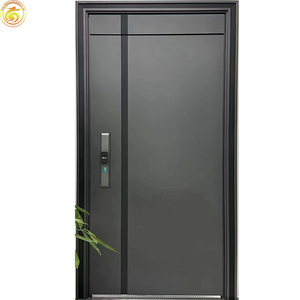
Custom Minimalist Design Stainless Steel Villa Main Entrance Luxury Front Entry Security Door
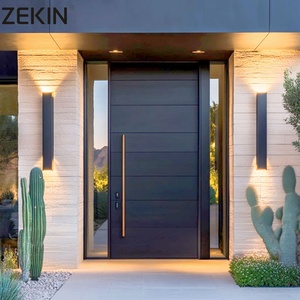
ZEKIN Factory 3D Carving Main Entrance Doors Anti-theft Heat Insulation Exterior Cast Aluminum Armored Doors
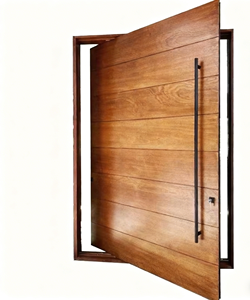
Hurricane Custom European Luxury Modern Pivot Doors with Long Handle Entrance Door Villa Main Door
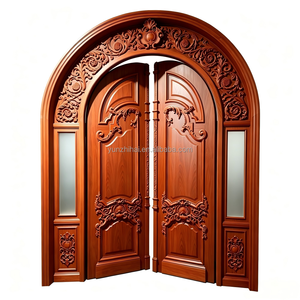
High-End Arched Double Door Featuring Glass Inserts And Handcrafted Detail For Luxury Home Entrance
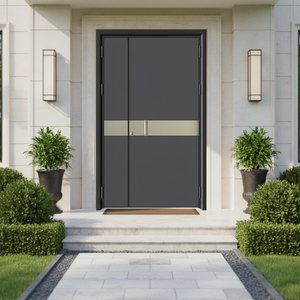
Luxury Cast Aluminum Front Entry Door High Security Anti-Theft Fire Prevention Pivot Design Premium Alloy Frame
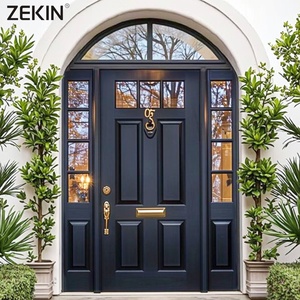
ZEKIN Customized Modern Aluminum Exterior Entry Solid Pivot Door For Villa Front Door Smart Lock
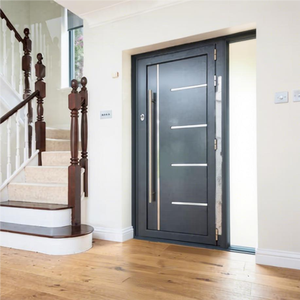
Modern Design Waterproof Anti-Theft Aluminum Security Door Wholesale Metal Front Entry Door
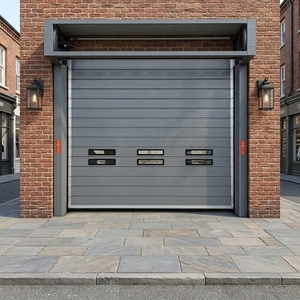
Heavy Duty Aluminum Spiral High Speed Door Windproof Anti-Theft Fast Door Entrance Door For Commercial Outlets
CE Certification Standards for Main Entrance Doors: Technical Requirements for EU Exporters
In the European Economic Area (EEA) and expanding global markets that adopt harmonized standards, CE marking for exterior main entrance doors is not merely a marketing attribute—it is a mandatory legal directive governed by the Construction Products Regulation (CPR) EU No 305/2011. Sourcing main doors from factories that operate under verified CE Frameworks guarantees structural safety, energy efficiency, weatherproofing, and fire protection across residential and commercial developments.
The primary standard governing external pedestrian doorsets without fire resistance or smoke leakage characteristics is EN 14351-1:2006+A2:2016. When main entry assemblies incorporate fire-resistance features (such as specialized armored or cast aluminum doorsets), they fall under the co-normative mandate of EN 16034. For international B2B buyers, architectural specifiers, and project contractors, evaluating factory compliance requires analyzing several core performance parameters certified by accredited Notified Bodies:
Thermal Insulation (U-Value)
Under EN ISO 10077-1 and 10077-2, main doors must meet strict $U_d$ thresholds. High-end aluminum break systems reach $U_d \le 0.78 - 1.2 \text{ W/m}^2\text{K}$ through polyolefin foam insulations and polyamide PA66 thermal barriers.
Burglar Resistance (EN 1627)
Certified entrance doors undergo static load, dynamic impact, and manual burglary attempts. Compliance requires Resistance Classes RC2, RC3, or RC4, featuring multi-point locking systems and anti-drill manganese plates.
Air, Water & Wind Resistance
Mandatory EN tests evaluate Air Permeability (EN 12207 Class 4), Watertightness (EN 12208 up to Class E1050), and Resistance to Wind Load (EN 12210 Class C5) to withstand extreme typhoon and hurricane pressure.
Declaration of Performance (DoP): Genuine CE-certified door manufacturers must issue a official DoP for every production lot. This document tracks Factory Production Control (FPC) records, material traceabilities for 6063-T5 aluminum profiles, glass performance metrics, and hardware stress ratings.
Future Procurement Trends for Global Door Importers & Distributors
The global entrance door market is undergoing a structural shift driven by carbon neutrality mandates, smart home ecosystem integration, and architectural demands for large-scale openings.
As commercial procurement managers, importers, and real estate developers recalibrate their supply chains for 2025 and beyond, several critical macro trends govern successful factory partnerships:
1. Decarbonization & Low-Carbon Extrusion
Driven by the EU Green Deal and EPBD directives, buyers prefer factories utilizing low-carbon primary aluminum billets extruded with renewable hydro/solar energy. Comprehensive Environmental Product Declarations (EPD) are becoming mandatory in project bidding.
2. Seamless Mechatronic Integration
Traditional mechanical locking systems are rapidly being superseded by motorized multi-point automatic locks compatible with Matter, Zigbee, and Apple HomeKit. Front doors now incorporate handle-embedded biometric sensors, 3D facial recognition, and remote access logs.
3. Knockdown (KD) & Modular Packaging
To optimize ocean freight container utilization amid volatile shipping rates, leading factories offer precision CNC-machined Knockdown frame assemblies with pre-fitted gaskets and plug-and-play wiring harnesses, cutting container shipping volumes by up to 60%.
Product Development Trends: Structural Engineering of Modern Entrances
Architectural entrance doors have evolved from traditional barriers into complex, multi-material engineered systems designed to anchor high-end residential and commercial facades. The market demands three distinct architectural categories:
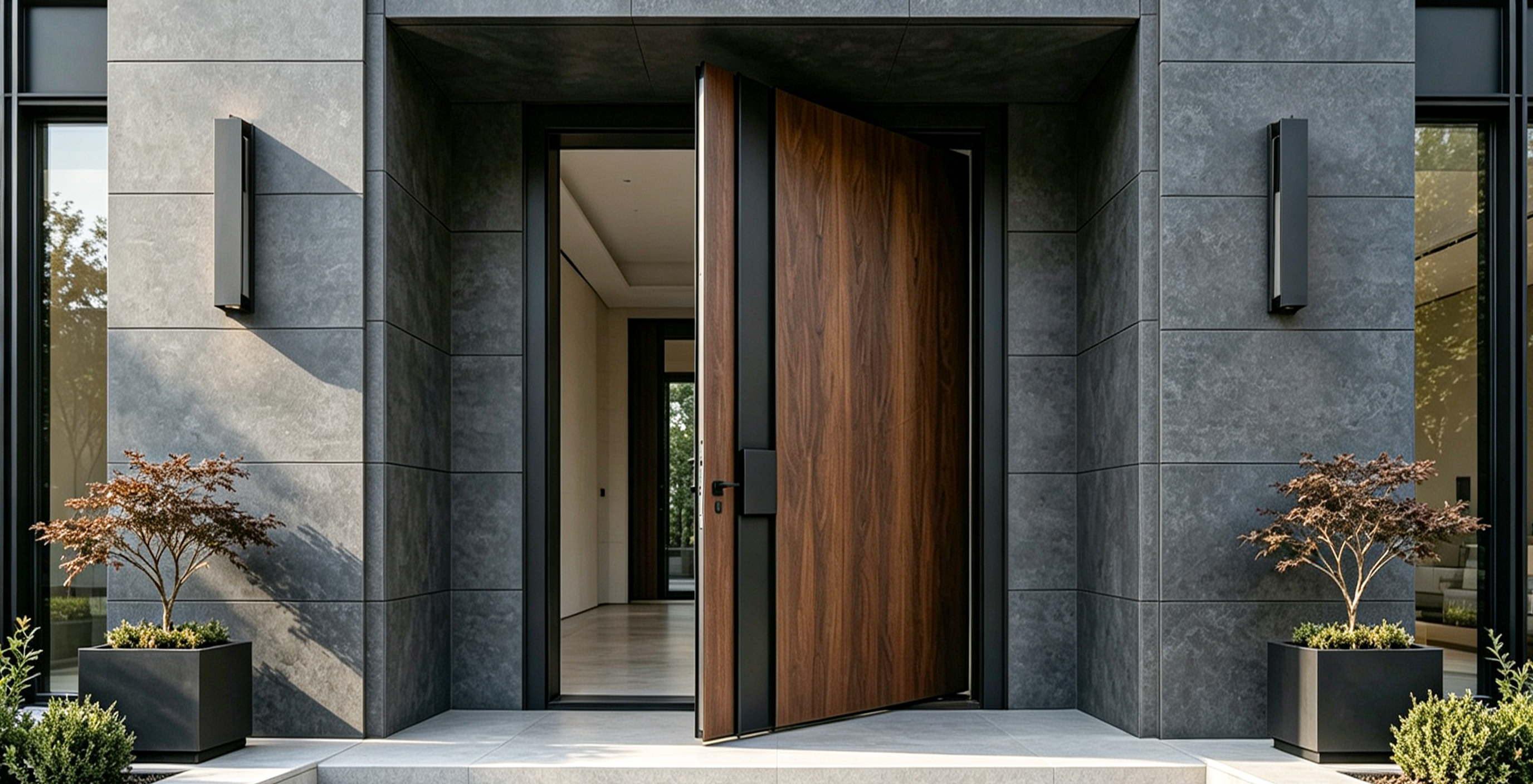
Minimalist Extra-Tall Pivot Systems
Architects are pushing entry heights beyond 3.5 meters and widths past 2.0 meters. Achieving dimensional stability without frame warping requires heavy-duty 6063-T5 aluminum profiles reinforced with internal steel trusses and hydraulic floor pivots rated for up to 500kg leaf weights.
Advanced pivot doors feature multi-stage perimeter brush seals combined with active magnetic drop-down bottom seals to maintain air and water tightness despite the rotation offset.
Cast Aluminum Armored & 3D Carving Doors
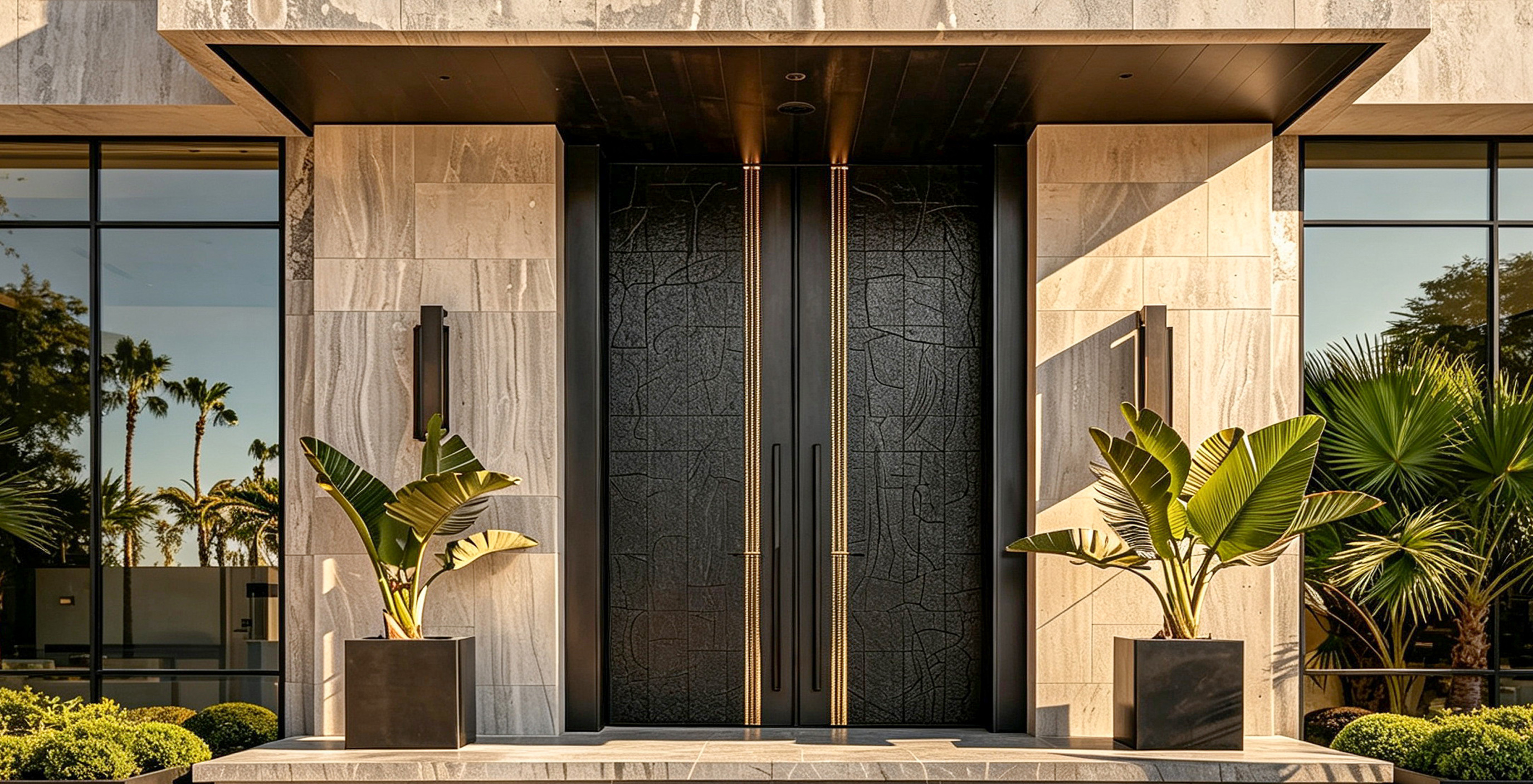
Combining security with luxury aesthetics, cast aluminum entry doors utilize solid 8mm-12mm thick cast aluminum front panels mounted to galvanized steel or aluminum honey-comb core structures. These doors provide unmatched impact resistance, extreme fire suppression (up to EI60), and acoustic isolation up to 42dB.
Finishes rely on Qualicoat Class 2 powder coatings or high-durability PVDF fluorocarbon spraying that guarantee 20+ years of color retention without UV chalking or oceanfront salt-spray corrosion.
Material Selection Matrix for Main Entrance Doors
A rigorous architectural comparison evaluating material characteristics for commercial procurement and high-end residential developments:
| Engineering Attribute | Aluminum (6063-T5 Break) | Solid Hardwood | Galvanized Steel | Structural Fiberglass |
|---|---|---|---|---|
| Dimensional Stability | Zero structural warping; zero moisture expansion | Prone to swelling, cracking & grain twist | High expansion under direct heat exposure | Good stability, rigid matrix |
| Corrosion & Weathering | Non-rusting; Qualicoat / PVDF salt-spray proof | Requires routine re-sealing & staining | Rust risk if zinc skin is compromised | Resistant to UV & salt-spray |
| Max Oversized Capacity | Excellent strength-to-weight; up to 6m heights | Weight restricted; sag risk over 2.4m | Heavy; structural hinge wear | Limited to stock mold dimensions |
| Thermal Insulation ($U_d$) | Ultra-low ($0.78 - 1.2 \text{ W/m}^2\text{K}$) with PA66 | Moderate ($1.4 - 1.8 \text{ W/m}^2\text{K}$) | Poor without complex core thermal breaks | Good ($1.1 - 1.5 \text{ W/m}^2\text{K}$) |
| Maintenance Cycle | Low (Occasional neutral soap washing) | High (Refinishing every 12–24 months) | Medium (Rust check & touch-up paint) | Low (Surface wash) |
Enterprise Excellence: Foshan Aludex Doors & Windows Co., Ltd.
Over two decades of specialized extrusion, precision engineering, and global door export capabilities headquartered in Foshan, Guangdong.
Founded in 2004, Foshan Aludex Doors & Windows Co., Ltd. operates as an elite manufacturer and exporter specializing in custom architectural aluminum entry doors, oversized pivot systems, armored security doors, and matching outdoor aluminum architectural structures.
Operating a massive 30,000 m² modern manufacturing complex staffed by over 300 skilled technicians, two dedicated production bases, and an in-house R&D innovation center, Aludex maintains complete vertical integration over the entire production chain:
- In-House Billet Extrusion: Custom profile die development using high-purity 6063-T5 architectural grade aluminum alloy.
- Chemical Surface Pre-treatment: Multi-stage chromate-free conversion lines preparing surfaces for extreme adhesion.
- Automated Powder & Wood Grain Coating: Swiss Gema electrostatic coating equipment executing Italian heat-transfer wood grain applications.
- 5-Axis CNC Machining: Ultra-precise milling of hardware pockets, smart lock mortises, and 3D engraved relief door panels.
- Full Factory Assembly & Testing: Pre-hanging, laser square alignment, and weather seal testing prior to export packing.

In-House 6-Stage Quality Assurance (FPC) Protocol
Spectrometer Alloy Check
Chemical composition analysis testing raw aluminum billets to verify Mg and Si ratios within 6063-T5 tolerances.
Profile Anodizing & Coating
Cross-hatch adhesion and thickness testing ensuring powder coats exceed 60-80 microns thickness.
CNC Machining Calibration
5-Axis milling centers with laser calibration maintaining lock cutout tolerances within ±0.1mm.
Thermal Strip Insertion
Automated rolling machines inserting glass-fiber reinforced PA66 strips for structural shear strength.
Hardware Integration
Factory pre-installation and 100,000-cycle stress testing of smart locks, pivots, and hidden drop seals.
Crate & Protection
Multi-layer protective film, foam corner shields, and fumigated solid wooden box export packaging.
Frequently Asked Questions for B2B Importers & Project Engineers
Expert clarification on testing protocols, custom shop drawings, logistics, and quality assurance.
How does factory CE certification protect overseas importers from customs holds and legal liabilities?
Under European Union regulations, importing structural building products without legitimate CE marking and a verified Declaration of Performance (DoP) exposes importers to immediate customs impoundment, heavy fines, and mandatory site removal. Working directly with a certified manufacturer ensures all door profile alloys, glass assemblies, and hardware components carry verified test reports under EN 14351-1, backed by fully documented Factory Production Control (FPC) audits.
What protocols are followed if entry doors arrive scratched or structurally damaged during ocean transport?
Our export quality protocol mandates photograph and video recording upon unboxing within 48 hours of container unloading at your warehouse or project site. If damage is identified as transit-related or attributable to factory packaging, our dedicated claims team immediately initiates marine insurance processing and initiates priority manufacturing of replacement door leaves or profile frames within 7 to 10 working days to prevent project timeline delays.
Are technical physical samples and color swatches available prior to commercial contract signing?
Yes. We supply comprehensive sample packages for B2B buyers, distributors, and real estate developers. Sample kits include profile cross-section models (e.g., T65, T85, D100 Thermal Break series), dual-color powder coat chips, wood grain transfer swatches, and miniature glass sample units. Physical sample kits are prepared within 1 to 4 business days upon technical specification confirmation.
What are the standard lead times for custom-engineered aluminum entry doors?
Standard production schedules run approximately 20 to 40 days depending on order volume. Complex bespoke projects involving custom 3D cast aluminum panels, specialized motorized smart locks, or non-standard RAL color matching take 30 to 45 working days. Ocean freight lead times range from 18 to 35 days depending on destination port (e.g., Felixstowe, Rotterdam, Hamburg, Los Angeles, or Dubai).
Do you support OEM / ODM private-label projects for door distributors and window brands?
Absolutely. We operate extensive OEM and ODM partnerships globally. We provide custom profile die extrusion, private-label branded protective films, customized installation manuals, branded packaging crates, and tailored CAD/BIM drawing libraries so distributors can seamless integrate our entry doors into their catalog offerings.
What technical information is required to receive an accurate shop drawing and quotation?
To prepare precise CAD shop drawings and pricing, our engineering team requires: (1) Rough Opening dimensions (Width x Height), (2) Opening configuration (Pivot, Single, Double, Sidelight/Transom), (3) Target U-value or thermal break requirement, (4) Desired locking system (Smart Biometric vs Mechanical Multi-point), (5) Preferred surface finish/color code, and (6) Quantity and destination port.
Accelerate Your Door Sourcing & Project Procurement
Connect directly with our senior door engineering team to review CAD drawings, obtain CE compliance documentation, or request product catalogs and sample swatches.