Engineered Architectural Glass & Aluminum Entrance Portals
Explore our top 8 precision-manufactured exterior entrance assemblies. Every model is fabricated with reinforced alloy substructures, multi-point locking provisions, acoustic insulation, and full CE-compliant glazing configurations.
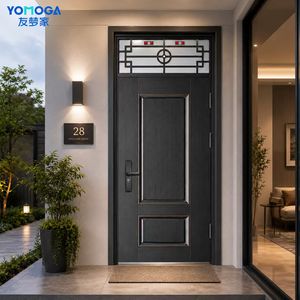
Stainless Steel Double Door Security Door for Residential Villa
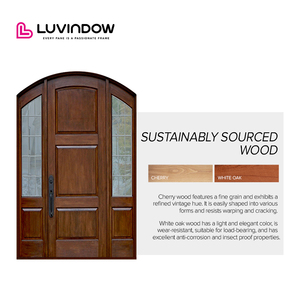
American Style Contemporary Modern Main Entrance Pivot Door
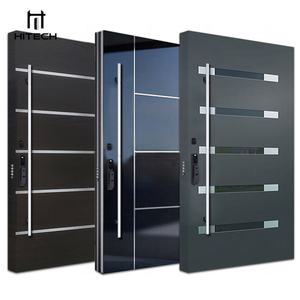
36-Inch Exterior Pivot Entrance Door With Biometric Smart Lock
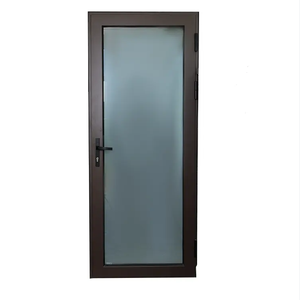
RG50 Slim Casement Door Double Tempered Acoustic Glass System
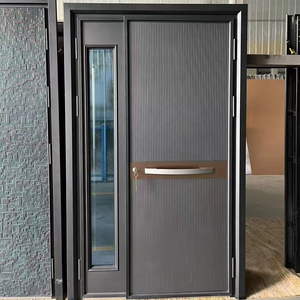
Cast Aluminum Armored Fireproof & Acoustic Swing Entrance Door
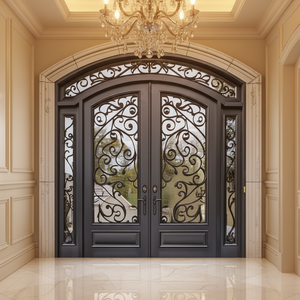
Luxury Wrought Iron Security Glass Exterior Entrance Door
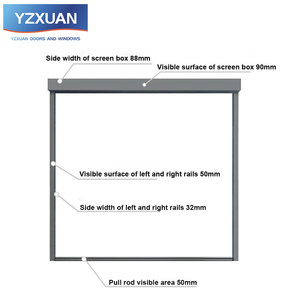
Smart Motorized Invisible Screen Entry Portal System
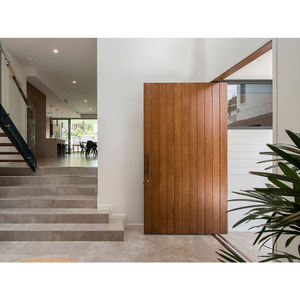
Modern Architecture Hybrid Aluminum-Wood Large Pivot Door
The Engineering Architecture of Modern Glass Entry Portals
Modern entrance architecture is undergoing a foundational paradigm shift. Glass entry doors are no longer simple threshold closures—they are dynamic, load-bearing thermal enclosures engineered to satisfy demanding building physics, acoustic standards, and European CE directives.
Harmonized CE Norms (EN 14351-1:2006+A2:2016)
Under the Construction Products Regulation (CPR 305/2011/EU), CE certification on exterior pedestrian door sets is mandatory across the European Economic Area. Every production batch fabricated in our Foshan facility complies strictly with factory production control (FPC) mandates, ensuring structural stability, dangerous substance containment, and traceable mechanical tolerances.
- EN 12210 Wind Load Resistance: Up to Class C5/B5
- EN 1026 Air Permeability: Class 4 tight perimeter sealing
- EN 1027 Water Tightness: Rated up to Class 9A (600 Pa)
Thermal Break Metallurgy & Polyamide Cavities
Aluminum exhibits a natural thermal conductivity coefficient of approximately 205 W/(m·K). To achieve the demanding U-values mandated by modern regional codes (such as UK Part L, Germany GEG, and IECC 2024), we deploy D100 and T93 chambered extrusions isolated by 24mm to 34mm PA66 GF25 (25% glass fiber reinforced polyamide) structural thermal struts.
- Elimination of interstitial condensation & frost bridging
- Multi-chamber EPDM co-extruded acoustic sealing gaskets
- Integrated aerogel cavity stuffing for sub-zero zones
High-Performance Architectural Glazing Stack
A glass door is only as resilient as its glazing unit. We specify dual-chamber triple glazed and laminated assemblies adhering strictly to EN 12150 (thermally toughened safety glass) and EN 14449 (laminated safety glass). Interlayers utilize acoustic PVB or structural SentryGlas (SG) to resist impact stresses, dynamic seismic shear, and deliberate forced entry attempts.
- Argon gas infill with 90%+ concentration and warm-edge spacers
- Double/Triple silver Magnetron Low-E coatings (SHGC ≤ 0.28)
- Tested burglar resistance classes (RC2 / RC3 pursuant to EN 1627)
Product Development & Engineering Horizons (2025–2030)
As luxury residential developments embrace floor-to-ceiling vistas and high architectural transparency, entrance systems are adapting through structural glazing engineering, intelligent IoT access controls, and active solar management.
1. Massive Monolithic Oversized Pivot Portals
Traditional butt hinges place immense rotational stress on side jamb profiles, limiting door sash dimensions to 1.0 × 2.4 meters. The modern trend favors heavy-duty floor-and-head concealed pivot bearings capable of supporting leaf weights from 400 kg up to 1,200 kg, and spans reaching 2.2 meters wide by 4.5 meters high.
By distributing vertical gravitational dead loads directly into reinforced structural slabs rather than vertical perimeter jambs, architectural pivot systems eliminate sash sagging and preserve micro-clearance sealing tolerances across decades of use.
2. Smart IoT Biometrics & Concealed Automation
Mechanical keys are being superseded by seamlessly embedded access mechanisms. In modern glass entry portals, electronic mortise sets are routed internally inside structural aluminum mullions or full-height vertical pull bars (such as our proprietary T05 and T6 handle integrations).
Current developments integrate 3D facial recognition, live vein biometric scanning, and encrypted wireless bus gateways (Matter, Zigbee, Apple HomeKit) directly powered through continuous concealed power loops passing through pivot pins.
3. Dynamic Electrochromic & Photovoltaic Glass
Privacy without compromising natural illumination represents a key consumer demand. Switchable polymer dispersed liquid crystal (PDLC) and electrochromic glass allow entry leaves to transition from crystal-clear optical transparency to opaque frost in milliseconds via motion sensors or wall controllers.
Simultaneously, building-integrated photovoltaics (BIPV) embedded within semi-transparent glass lites generate auxiliary energy to power internal smart locks and ambient edge LED linear illumination without external wiring.
Future Procurement Trends for Importers, Architects & Builders
International trade dynamics, carbon compliance, and rising jobsite labor costs across North America, Europe, and Australasia are fundamentally restructuring how developers procure architectural doors.
Consolidation to Single-Source Production
Fragmented supply chains—where aluminum frames are sourced from one vendor, glass from another, and European hardware from a third—create disastrous alignment and liability risks on job sites. Importers are rapidly shifting toward vertically integrated manufacturers capable of delivering fully assembled, factory-glazed, and pre-commissioned portal units.
Consolidated shipments allow project managers to receive complete exterior envelopes (including courtyard gates, glass entrance doors, matching structural railings, and pergolas) in uniform finishes and guaranteed matching anodized or powder-coated color batches.
De-Risking Jobsite Labor via "Plug-and-Play" Pre-Hanging
Field labor hourly rates in major markets like Sydney, London, New York, and Vancouver have risen sharply. Sourcing knocked-down (KD) doors that demand complex on-site glazing, silicone curing, and intricate lock calibration regularly leads to costly site installation failures.
Leading procurement teams now mandate factory pre-hung assemblies. Hinges or concealed pivot pins, electric strikes, drop-down acoustic automatic floor seals, and insulating glass units arrive pre-installed in heavy-duty shipping jigs, slashing site installation time from 12 hours down to 90 minutes.
Embodied Carbon Audits & Circular Certification
With environmental product declarations (EPDs) becoming a baseline requirement for commercial and luxury residential tenders under BREEAM, LEED v4.1, and DGNB standards, material traceability is a critical competitive metric. Procurement audits specifically target secondary aluminum utilization.
Our certified low-carbon 6063-T5 billeting leverages hydro-electric primary smelting alongside closed-loop factory scrap recycling, providing verifiable life cycle carbon reductions without sacrificing metal tensile strength or grain consistency.
Engineering Specification & Performance Matrix
Compare standard commercial entry doors with our architectural-grade, CE-certified modern glass entry systems across critical building performance parameters.
| Performance Specification | Aludex CE Certified Glass Door Systems | Standard Commercial Commodity Doors | Timber / Wood Core Glass Doors |
|---|---|---|---|
| Alloy Grade & Temper | 6063-T5 Virgin Ingot (Wall Thickness: 2.0–3.5mm) | Recycled Low-Grade Ingot (1.0–1.4mm) | Engineered Softwood / Hardwood Veneer |
| Thermal Transmittance (Ud) | 0.85 – 1.2 W/(m²·K) (PA66 GF25 Thermal Break) | 3.8 – 5.2 W/(m²·K) (Non-Thermal Bridge) | 1.6 – 2.4 W/(m²·K) (Subject to seal decay) |
| Glazing Architecture | Triple Pane / Laminated Low-E + Argon + Warm Edge | Single Glass or Basic Double Pane Air | Double Pane Annealed or Standard Tempered |
| Wind Pressure Tolerance | Class C5 / B5 (≥ 3000 Pa dynamic load test) | Class B2 (≤ 1000 Pa) | Varies (Deflection risk under high moisture) |
| Acoustic Attenuation (Rw) | 38 dB – 46 dB (Acoustic PVB interlayers) | 22 dB – 26 dB | 28 dB – 32 dB |
| Perimeter Weather Sealing | Triple Continuous EPDM Vulcanized Gaskets | Single Brush Strip or PVC Gasket | Foam Compression Strips (Degrades) |
| Max Leaf Dimension (W × H) | Up to 2,200mm × 4,500mm (Pivot Load: 800kg+) | Limited to 1,000mm × 2,200mm | Limited due to bowing and thermal expansion |
| Surface Protection Finish | Qualicoat Class 2 Powder / 25μm Fluorocarbon PVDF | Basic Commercial Paint (Chipping within 2 yrs) | Polyurethane Varnish (Annual maintenance) |
Why Global Specifiers Partner With Foshan Aludex
Operating from the industrial epicentre of high-precision aluminum metallurgy in Foshan, China, Foshan Aludex Doors & Windows Co., Ltd. provides factory-direct engineering depth backed by two decades of manufacturing sovereignty.
30,000 m² Mega Manufacturing Base
Established in 2004, our facility encompasses two full-scale production centers and a specialized entrance systems engineering lab, employing over 300 skilled metallurgists and fabrication technicians.
Fully Integrated In-House Production
We eliminate sub-contractor markups and tolerances errors. From raw billet extrusion, pre-treatment wash tanks, automated vertical powder coating, to 5-axis CNC router engraving and clean-room IG assembly—everything is controlled under one roof.
Rigorous CE & ISO9001 Audited Quality
Every custom system is dry-assembled and checked with laser coordinate measuring machines for squareness, hinge axial alignment, corner crimp integrity, and lock bolt engagement prior to export-grade sea crating.
Accelerated Rapid Prototyping
Speed-to-market matters. Custom corner cutaways, profile extrusion samples, and glass finish swatches ship within 1 to 4 days. Standard container orders complete manufacturing within 20 to 40 days.
Extrusion
6063-T5 virgin billet hot extrusion to profile geometry.
Pre-Treatment
Multi-stage ultrasonic bath chemical degreasing & conversion.
Finish Coating
Qualicoat certified architectural powder or fluorocarbon PVDF.
5-Axis CNC
Sub-millimeter routing for concealed pivot hubs & smart locks.
Assembly
Polyamide barrier crimping, insulated glass glazing & seals.
Testing & Crating
Cyclic mechanical validation, wrap protection & IPPC wooden crate.
Step-by-Step B2B Door Specification Framework
To avoid costly site delays, dimensional disputes, or regulatory rejection during customs inspection, our structural engineering team utilizes this 5-point verification framework on every international project.
Step 1: Rough Opening & Structural Anchor Analysis
Measure rough openings across three vertical and three horizontal vectors. For monumental pivot assemblies exceeding 2.5 meters in height, identify floor slab rebar schedules to verify embedding depth for lower pivot thrust bearings. Transmit exact floor finish levels (FFL) to ensure bottom clearance seals function cleanly over hardwood, tile, or exterior drainage stone.
Step 2: Climatic Exposure & Glazing Configuration
Specify structural wind exposure pursuant to local code (e.g., AS/NZS 1170 for Oceania, EN 1991 for Europe, or ASTM E330 for the US). Select glazing coatings based on solar orientation: high solar gain (Low-E) for sub-arctic heating dominance versus low solar heat gain (SHGC ≤ 0.25) tinted/reflective coatings for high-irradiance equatorial zones.
Step 3: Hardware, Access & Compliance Sign-Off
Determine whether doors require standard mechanical multi-point hooks, emergency panic escape mechanisms (EN 179 / EN 1125), or networked smart motorized mortises. Once CAD shop drawings are generated, our engineering department furnishes comprehensive cross-sectional drawings, thermal simulation diagrams, and anchor calculations for architectural approval.
Frequently Asked Questions by Importers & Contractors
Direct answers to the most common structural, regulatory, shipping, and engineering inquiries received from overseas distributors, builders, and architectural specifiers.
How does CE certification under EN 14351-1 affect customs clearance and building inspections in Europe?
What guarantees and remediation protocols are provided if glass arrives damaged or frames are scratched during ocean freight?
What is the difference between European thermal break aluminum (PA66 GF25) and standard non-thermal aluminum in glass doors?
Can your glass entry doors accommodate custom smart locks, home automation systems, and motorized opening hardware?
What lead times should international procurement directors anticipate from initial CAD shop drawings to container departure?
Do you support private-label OEM / ODM branding for regional distributors and window/door showrooms?
What exact dimensional and technical details are required from our team to receive an engineered quote and shop drawings?
Initiate Your Commercial or Villa Door Specification
Connect directly with our Foshan engineering and structural design department. Submit your project drawings, opening schedules, or custom profile requirements for detailed structural calculations, factory-direct pricing, and comprehensive CE compliance documentation.