Featured OEM & ODM Designer Front Doors
Factory-direct customized entrance solutions engineered to exact architectural specifications, featuring thermal breaks, smart security locks, and precision craftsmanship.
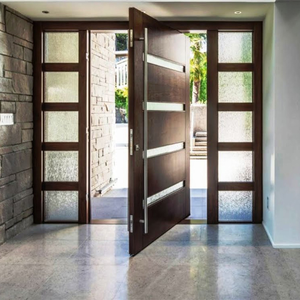
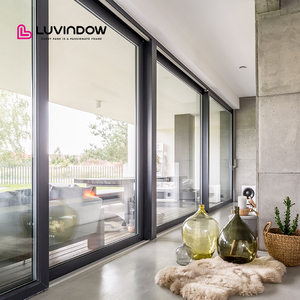
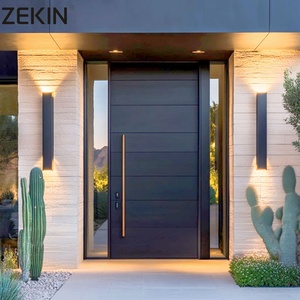
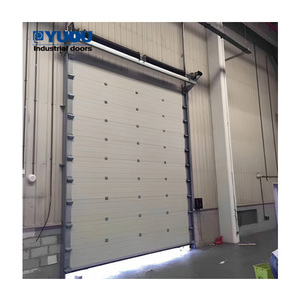
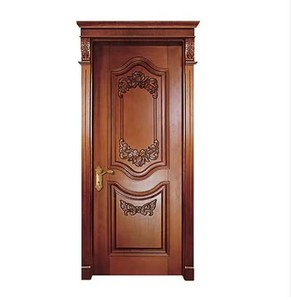
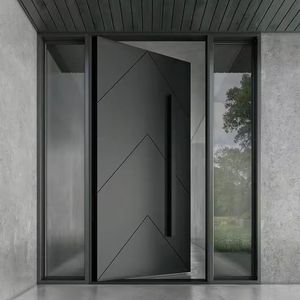
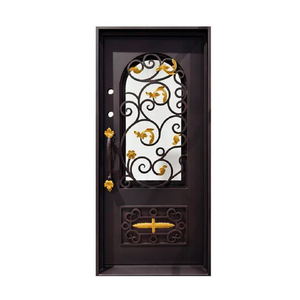
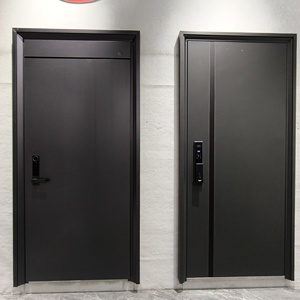
Factory Strengths & OEM/ODM Capabilities
Headquartered in Foshan, Guangdong—China's world-leading aluminum extrusion hub—we provide complete end-to-end manufacturing with full quality ownership.
SEO Information Gain Insight: Modern architectural procurement is shifting from simple aesthetics toward engineered longevity. Front doors must withstand wind load pressures (EN 12210 Class C5), sound transmission loss (STC 42+), and extreme thermal fluctuations (U-values < 1.2 W/m²K) without suffering frame warping, delamination, or finish oxidation.
Technical Breakdown: Structural Metallurgy & Front Door Engineering
Choosing the correct core material and structural framework is the single most critical decision in commercial and luxury residential entry door procurement. Below is an authoritative technical comparison of key materials used across modern front door manufacturing.
| Material Spec | Structural Rigidity & Weight | Thermal & Moisture Resistance | Maintenance Lifecycle | Security & Anti-Burglary Rating |
|---|---|---|---|---|
| 6063-T5 Architectural Aluminum | High strength-to-weight ratio; supports massive pivot leaves up to 500kg. | 100% moisture-proof; zero rot, expansion, or warp under climate extremes. | Zero structural maintenance; PVDF/Coating lasts 25+ years without fading. | EN 1627 RC3 / RC4 certified with integrated steel armor cores. |
| Cast Aluminum (3D Engraved) | Heavy-duty impact resistance; anti-dent high density surface. | Impervious to salt spray, humidity, UV radiation, and rain immersion. | Extremely low; hydrophobic finishes resist grime build-up. | Maximum resistance against mechanical penetration and cut-throughs. |
| Solid Teak / Hardwood Panels | Heavy, rigid, subject to atmospheric humidity micro-expansion. | Requires climate seals; prone to drying, cracking, or swelling in humidity. | High; needs periodic re-sealing, re-staining, and oiling every 2 years. | Moderate; vulnerable to moisture degradation over time. |
| 304 Stainless Steel Core | Exceptional mechanical tensile strength; heavy mass leaf structure. | High rust resistance, though coastal saline mist requires specific passivation. | Low; periodic wipe-downs needed to prevent surface tea-staining. | High anti-drill and anti-pry mechanical protection. |
Architectural Profile Series Engineering (T65, T85, T93 & D100 Thermal Break)
Our OEM manufacturing portfolio is categorized into distinct profile depths designed for specific wind load profiles, thermal envelopes, and architectural door sizes:
- T65 Profile Series: 65mm frame depth engineered for high-end standard residential single and double leaf hinged entrance systems. Offers exceptional structural stability for door heights up to 2.4 meters.
- T85 Profile Series: 85mm frame depth featuring multi-cavity insulation pockets and double EPDM perimeter weather-stripping. Designed for heavy-use multi-family residential entrances and light commercial facades.
- T93 Heavy-Duty Series: 93mm frame depth created specifically for grand villa entrances, oversized front door leaves, and armored cast aluminum panels weighing up to 400kg.
- D100 Thermal Break Series: Premium 100mm structural profile incorporating 24mm or 34mm Polyamide (PA66GF25) thermal barrier strips. Engineered specifically to achieve ultra-low U-values required by modern Passive House standards in cold or tropical climate zones.
Future Procurement & Design Trends in Designer Front Doors
As a leading OEM/ODM manufacturer, our R&D department tracks global procurement shifts across architectural firms, real estate developers, and international building material importers. The front entrance market is undergoing rapid evolution driven by five core macroeconomic and technological developments:
1. Dominance of Oversized Architectural Pivot Systems
Modern luxury residential architecture favors seamless indoor-outdoor flow and grand scale facades. Traditional floor hinges are being replaced by heavy-duty adjustable hydraulic pivot mechanisms concealed inside the header and threshold profiles. Pivot front doors reaching heights of 3.5 to 5.0 meters with widths exceeding 2.0 meters are becoming standard specification items in luxury villa projects across North America, the Middle East, and Australia. Procurement demand is shifting toward manufacturers capable of producing stable, lightweight yet structural aluminum leaves that rotate smoothly with fingertip pressure.
2. Thermal Break Integration & Passive House Performance
Global building energy codes (such as Europe's EPBD and North America's IECC) are tightening thermal efficiency mandates for building envelopes. Historic non-thermal front doors represent major thermal bridges. Procurement trends show a 45% year-over-year increase in demand for thermally broken aluminum front doors equipped with triple-pane Low-E argon-filled tempered glass inserts, warm-edge spacers, and multi-chambered polyamide thermal isolators. Buyers require verified thermal transmittance certificates (U-values ≤ 1.1 W/m²K) to satisfy energy audit compliance.
3. Embedded Invisible Smart Access Systems
Traditional surface-mounted mechanical deadbolts are rapidly giving way to integrated smart access hardware seamlessly machined into the aluminum door pull handles or hidden within the door edge profile. Procurement specifications now routinely demand 5-in-1 biometric access protocols, including:
- 3D Semiconductor Fingerprint Recognition embedded into vertical pull bars.
- Encrypted RFID / IC Card Proximity Sensors.
- Touchscreen Keypad Access with anti-peeping virtual pin technology.
- Tuya / Zigbee / Smart Life IoT integration for remote mobile app control.
- Hidden Mechanical Key Overrides concealed behind magnetic trim plates.
4. Hybrid Armor & Weather-Resistant Material Synergies
Architects are moving away from single-material doors in favor of hybrid structural composites. For example, combining an extruded 6063-T5 aluminum skeleton with an exterior 3D carved cast aluminum panel, an interior natural solid teak skin, and a high-density polyurethane insulation core. This hybrid approach delivers the warmth of real wood indoors, the indestructible corrosion-free weatherproofing of cast aluminum outdoors, and high acoustic insulation (STC 40+ dB) against environmental noise pollution.
5. Customization (OEM/ODM) at Scale with Shortized Lead Times
Mass-market standard sized doors are losing market share to agile OEM/ODM production model partners. Importers and contractors no longer accept long 90-day production cycles for customized architectural items. Modern manufacturing facilities utilize automated 5-axis CNC machining centers, digital color matching systems, and standardized extrusion stocks to deliver fully custom-made entrance systems within 20 to 35 business days from CAD drawing approval.
Step-by-Step OEM/ODM B2B Procurement Process
To ensure flawless execution on custom architectural door projects, our factory adheres to a rigorous 6-stage quality assurance and procurement workflow designed to eliminate site-fit errors and installation delays:
- Structural Specification & Rough Opening Review: The buyer provides site dimensions, wind load requirements, opening types (Pivot, Single, Double, Unequal Double), and target design renderings.
- CAD / BIM Engineering Drawings: Our engineering department generates detailed 2D CAD shop drawings detailing frame cross-sections, wall anchor positions, sill drainage channels, glass specs, and lock mortise cutouts within 48 hours.
- Material & Surface Finish Approval: Physical powder coating color swatches, wood-grain heat transfer samples, or cast aluminum texture swatches are dispatched via express air freight for client sign-off.
- Precision CNC Machining & Surface Treatment: Profiles are extruded, chemically pre-treated to resist oxidation, coated with premium PVDF or AkzoNobel powder coatings, and machined on multi-axis CNC workstations.
- Pre-Shipment Trial Assembly & Quality Testing: Every door leaf is assembled with its respective frame, lock body, hinges, and weather seals in our factory test bay to verify squareness, smooth latching, smart lock operation, and seal compression.
- Export-Grade Wooden Crating & Global Logistics: Complete door units are wrapped in protective PE film, corner-guarded, and secured in fully enclosed plywood crates with steel bands to prevent transit damage during ocean container transport.
Frequently Asked Questions for B2B Procurement
Technical and commercial clarity regarding custom OEM/ODM door manufacturing, order logistics, warranty terms, and project compliance.
Partner with China's Premier OEM/ODM Front Door Manufacturer
Whether you are a building material importer, architectural specifier, door brand owner, or project developer, our Foshan engineering team is ready to transform your CAD drawings into high-performance architectural reality.