Executive Summary: The Evolution of Modern Aluminium Front Doors in the Japanese Architectural Market
Japan’s architectural landscape is undergoing a decisive paradigm shift. Historically dominated by natural timber and light steel framing, contemporary residential developments, suburban luxury villas, multi-family apartment complexes, and industrial facility headquarters across Japan are rapidly transitioning to advanced 6063-T5 architectural-grade aluminium front entry doors. This structural shift is propelled by four intersecting market drivers: stringent energy conservation mandates under the Japanese Zero Energy House (ZEH) 2030 roadmap, increased frequency of extreme weather events demanding high wind-pressure resistance (JIS A 4702 S-5 rating), urban acoustic insulation requirements in dense metropolitan zones like Tokyo and Osaka, and the universal preference for zero-maintenance architectural exteriors that resist rot, corrosion, and seismic distortion.
As a premier factory-direct manufacturer rooted in Foshan, China—the global capital of precision aluminium extrusion—Foshan Aludex Doors & Windows Co., Ltd. (established in 2004) has spent over two decades engineering bespoke aluminium entry systems tailored specifically for overseas importers, general contractors (ゼネコン - Genekon), architectural design firms, and factory facility developers. Spanning a 30,000 m² state-of-the-art facility staffed by over 300 technical specialists, Aludex manages the complete industrial value chain in-house: from billet extrusion, chemical pre-treatment, anodizing, and fluorocarbon powder coating to high-precision CNC engraving, thermal break assembly, smart lock integration, and rigorous export packing.
This technical whitepaper provides an exhaustive, empirical benchmark of the Top 10 Modern Aluminium Front Doors serving Japan, offering structural engineers, procurement managers, and architects the exact performance metrics, localized application scenarios, material comparison matrices, and regulatory compliance insights required to make informed B2B sourcing decisions.
Information Gain Insight: Unlike standard steel doors that corrode in humid coastal climates or timber doors that warp under Japan's severe seasonal humidity shifts (tsuyu rain season vs. dry winter freezing), 6063-T5 extrusions with multi-chamber thermal breaks deliver dimensional stability within ±0.5mm, zero water absorption, and a service lifespan exceeding 30 years without refinishing.
Top 10 Modern Aluminium Front Door Systems for Homes, Factories & Commercial Facilities Serving Japan
To assist Japanese buyers, importers, and project engineers in selecting the optimal structural profile, the following detailed analysis outlines the top ten engineering configurations optimized for Japan's architectural codes and climatic zones.
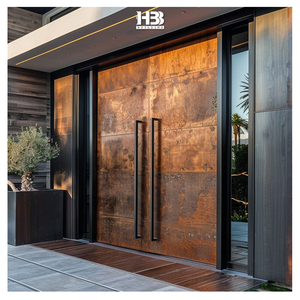
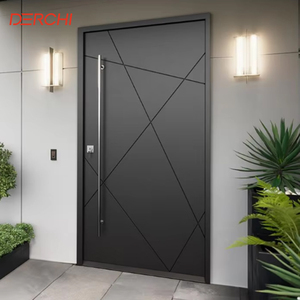
1. Ultra-Wide Thermal-Break Aluminium Pivot Entrance System (Luxury Villas & Modern Sukiya Residences)
Designed for grand architectural statement entrances, the Oversized Aluminium Pivot Door utilizes a floor-to-head concealed heavy-duty pivot axis capable of supporting single leaves up to 2.2 meters in width and 3.8 meters in height. Featuring Aludex's proprietary D100 Thermal Break Series, this door incorporates 24mm polyamide (PA66GF25) insulation bars that decouple the exterior aluminium skin from the interior profile, successfully eliminating thermal bridges.
- Thermal Transmittance (U-Value): ≤ 1.4 W/(m²·K) (Exceeds ZEH insulation standard for Regions 1 to 4 in Hokkaido/Tohoku).
- Structural Rigidity: 6063-T5 profile wall thickness of 3.0mm with internal corner-cleat crimping.
- Localized Fit: Ideal for modern Sukiya-style residential estates in Kyoto and Karuizawa seeking expansive openings without traditional weight penalties.
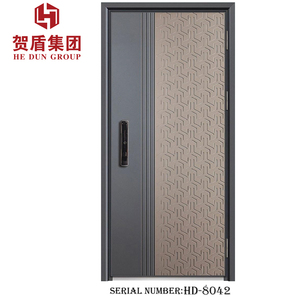
2. Cast-Aluminium Exterior Armored Security Door with Acoustic Ripple Panel
Combining heavy-metal security with understated Japanese minimalist aesthetics, this door features a solid 8mm cast aluminium decorative faceplate bonded to a high-density rockwool and honeycomb acoustic core. The surface ripple texture simulates traditional Japanese hammered metalwork (Tsuchime) while offering certified bullet-proof and forced-entry resilience.
- Acoustic Insulation: Sound reduction index up to 42 dB (JIS T-3 rating), blocking dense traffic noise in urban residential lots.
- Corrosion Resistance: Qualicoat Class 2 fluorocarbon coating withstands 3,000+ hours of continuous salt-spray testing.
- Localized Fit: Urban Tokyo residential lots adjacent to major transportation arteries (e.g., Yamate-dori, Shinjuku).
3. Minimalist Thermal-Break Aluminium Casement Door with Flush Architectural Frames
A flagship solution for ultra-modern residential developments, this single-leaf casement door achieves a completely flush interior and exterior plane. The frame profile depth of 85mm allows for seamless integration into light-gauge steel framing (LGS) or traditional timber post-and-beam structures (Zairai-kouhou).
- Air & Water Tightness: Triple EPDM tubular weatherstripping achieving JIS A 4702 A-4 airtightness and W-5 watertightness (500 Pa water pressure resistance).
- Locking System: Factory pre-routed multi-point gear lock with anti-lift hooks.
- Localized Fit: Modern prefabricated homes and urban narrow-lot residences across Kanagawa and Saitama prefectures.
4. Heavy-Duty Dual-Leaf Industrial Aluminium Security Door for Factories & Logistics Hubs
Engineered specifically for commercial factory entrances, warehouse administrative hubs, and cleanroom access points, this heavy-duty double door replaces maintenance-heavy steel doors. Built on Aludex’s T93 Heavy-Duty Profile Series, it accepts automated panic bars, magnetic card access control, and industrial door closers.
- Impact & Abuse Resistance: Reinforced internal ribbing withstands high-frequency industrial foot traffic and cart impacts.
- Fire & Smoke Seals: Fitted with intumescent smoke seals that expand under extreme heat to isolate industrial zones.
- Localized Fit: Manufacturing plants and logistics centers throughout the Kanto and Chukyo industrial belts (Aichi, Shizuoka, Chiba).
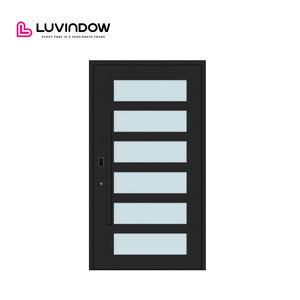
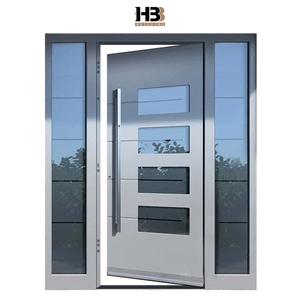
5. Insulated Aluminium & Stainless Steel Entry Door with 4-Panel Tempered Daylight Inserts
Incorporating four vertical or horizontal daylighting panels glazed with triple-pane tempered low-E safety glass (6mm + 12Ar + 6mm + 12Ar + 6mm), this entry door balances natural interior lighting with unyielding perimeter defense. The frame is reinforced with internal 304 stainless steel security mesh.
- Daylight Transmittance vs Thermal Loss: Low-E coating reflects far-infrared heat while permitting 68% visible natural light.
- Glass Safety: JIS R 3206 certified toughened glass resistant to severe impact and wind-borne debris during typhoons.
- Localized Fit: Coastal residential developments in Shizuoka, Wakayama, and Shikoku exposed to high wind and marine air.
JIS A 4702 Structural Integrity
Rigid 6063-T5 extrusions prevent door-frame racking during earthquake ground movements, ensuring emergency egress paths remain unblocked.
Smart Key & FeliCa Integration
Factory pre-wired to support Japanese smart locks (T05, T6, Q01 series) compatible with FeliCa IC cards, smartphone apps, and biometric sensors.
Direct OEM/ODM Manufacturing
Custom CAD shop drawings, physical finish swatches in 1-4 days, and bulk manufacturing delivered within 20-40 days to major Japanese ports.
6. Residence Main Entrance Security Aluminium Door with Integrated FeliCa Smart Keyway
Specifically developed for multi-family residential complexes and modern custom homes, this door incorporates hidden conduit pathways within the profile to accept Japan’s leading electronic lock standards (including Pasmo/Suica compatible FeliCa encryption modules and biometric fingerprint sensors).
- Locking Mechanism: 3-way motorized multi-point deadbolt with anti-drilling manganese steel protective plates.
- Handle Design: Ergo-slender aluminum pull handle with concealed key cylinder access.
- Localized Fit: Condominiums, apartments, and multi-generational housing (Nisetai-jutaku) nationwide.
7. Solid Wood-Grain Anodized Aluminium Pivot Door (Japandi & Heritage Architectural Style)
Achieving the authentic visual warmth of natural cedar (Sugi) or cypress (Hinoki) without wood’s inherent susceptibility to rotting, swelling, and termite damage. Utilizes high-definition vacuum Italian heat-transfer wood grain powder coating over anodized aluminium profiles.
- Surface Guarantee: 15-year non-fading guarantee against severe UV radiation and moisture absorption.
- Environmental Performance: Zero VOC emissions, 100% recyclable alloy supporting circular construction.
- Localized Fit: Traditional ryokan refurbishments, heritage residential upgrades, and Japandi modern villas.
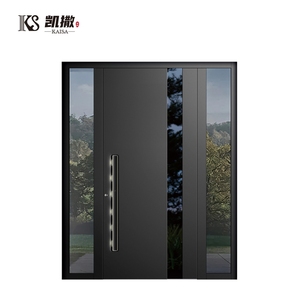
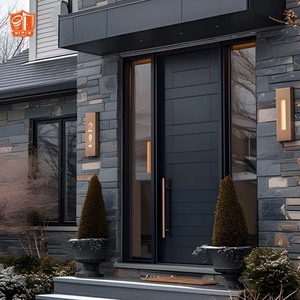
8. High-Traffic Aluminium Sidelight Entrance System for Commercial Headquarters & Parks
A heavy-use architectural entryway combining a central main leaf with matching fixed structural sidelights and top transom windows. Built to handle thousands of open-close cycles daily while maintaining climate control across corporate lobbies.
- Hardware Durability: Heavy-duty German-engineered continuous hinges rated for 500,000 operational cycles.
- Threshold Design: Flush barrier-free thermal threshold complying with Japanese Universal Design standards.
- Localized Fit: Corporate offices, R&D parks, and commercial hubs in Nagoya and Fukuoka.
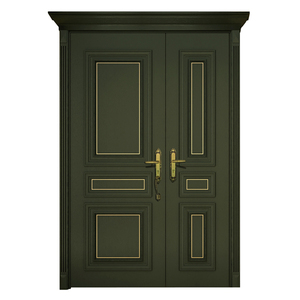
9. Armored Heavy-Duty Fire-Resistant Aluminium Double Entry Door
Engineered with double-layer reinforced aluminium sheet skins (3.0mm outer / 2.0mm inner) encasing a solid ceramic-fiber fire core. Designed for high-risk industrial facilities requiring both security perimeter shielding and thermal barrier performance during emergency events.
- Security Class: RC3 / RC4 equivalent forced-entry resistance.
- Finish Options: Matte anodized metallic, fluorocarbon charcoal grey, or custom RAL powder colors.
- Localized Fit: Chemical facilities, automated factories, and high-value equipment plants.
10. Barrier-Free Low-Threshold Aluminium Entrance Door for Senior & Universal Housing
Aligned with Japan’s rapidly aging demographic demands, this entry system features an ultra-low 12mm stainless-covered aluminum threshold that allows smooth wheelchair roll-over while employing drop-down automatic bottom seal gaskets to prevent rainwater infiltration during windstorms.
- Operating Force: Low opening resistance (< 20 N force required), making it effortless for elderly occupants.
- Drainage Mechanism: Concealed internal water drainage channel routing driven rainwater outward.
- Localized Fit: Assisted living facilities, healthcare centers, and universal design residential homes.
Material Comparison Matrix: Aluminium vs. Alternative Entry Door Materials
For B2B importers, architects, and contractors in Japan, evaluating material performance across life-cycle cost, environmental resilience, and structural integrity is critical. The table below presents an empirical comparison of Foshan Aludex 6063-T5 Thermal Break Aluminium Entry Doors against traditional alternatives.
| Performance Benchmark | Aludex 6063-T5 Aluminium Door | Galvanized Steel Door | Natural Solid Wood Door | Fiberglass (GRP) Door |
|---|---|---|---|---|
| Corrosion & Moisture Resistance | Superior; Non-rusting alloy with powder/anodized coating | Poor to Moderate; Rusts at scratched joints or sea salt zones | Poor; Prone to warping, rotting, and fungal attack under dampness | High; Corrosion proof but surface gelcoat degrades under UV |
| Dimensional Stability (Seismic/Temp) | Zero dimensional change; High elastic modulus prevents racking | Moderate; Thermal expansion causes frame binding in summer | Very Poor; Expands/contracts up to 8% seasonally | Moderate; Subj. to thermal distortion under direct sun |
| Thermal Insulation (ZEH Fit) | Excellent with PA66 thermal break (U ≤ 1.4 W/m²K) | Poor unless filled with thick PU foam core | Moderate natural insulation, lost if gaps develop | Good thermal insulation, limited profile depth |
| Oversized Leaf Capabilities | Exceptional strength-to-weight ratio (Leaves up to 3.8m H) | Heavy; Requires structural steel hinges & heavy framing | Limited; Oversized leaves sag and twist over time | Restricted to standard modular sizes |
| Maintenance Overhead | Zero maintenance; Occasional wipe-down with water | High; Needs frequent anti-rust repainting | Very High; Annual sanding, sealing, and re-varnishing | Low to Moderate; Recoating needed after UV breakdown |
| Design & Surface Customization | Limitless CNC carving, anodizing, wood grain, metallic shades | Stamped press patterns only; Rigid design options | High craftsman work required; Expensive custom work | Molded patterns; Difficult to customize single units |
Localized Application Scenarios Across Japan's Regional Climates
Sourcing entry doors for Japan requires precise engineering adaptation to regional microclimates. Aludex customizes internal insulation, glass unit fill, and hardware alloys based on destination prefectures:
Scenario A: Cold-Climate & Heavy-Snow Prefectures (Hokkaido, Tohoku, Hokuriku)
In regions such as Sapporo, Aomori, and Niigata, extreme indoor-outdoor thermal gradients cause severe surface condensation on standard aluminum doors, leading to interior mold and sill damage. Aludex supplies the D100 Thermal Break System equipped with 34mm multi-chamber polyamides, argon-gas filled triple glazing, and frost-proof silicone weather seals. This guarantees zero surface sweat even when outside temperatures plummet to -20°C while indoor heating is set to 22°C.
Scenario B: Typhoon-Prone Coastal Zones (Okinawa, Kyushu, Shikoku & Pacific Coast)
Subtropical coastal areas face violent typhoons during autumn, generating wind pressures exceeding 4.0 kPa along with heavy salt spray. Aludex doors specified for coastal Japan feature 3.0mm heavy-wall 6063-T5 extrusions, 316 stainless steel multi-point locking rods, and dual-layer Qualicoat fluorocarbon finishes that prevent sea-salt pitting corrosion for decades.
Scenario C: High-Density Urban Seismic Belts (Tokyo Metropolis, Osaka, Nagoya)
In Tokyo's dense wards, doors must simultaneously satisfy strict soundproofing codes (blocking street noise above 75 dB) and seismic shear tolerance. Aludex door frames are fitted with flexible EPDM expansion gaskets and heavy 3D-adjustable hinges that absorb up to 1/120 frame displacement without jamming the door leaf, ensuring occupants can safely open the door following a major seismic event.
Corporate Sourcing Advantage: Why Japanese B2B Buyers Partner with Foshan Aludex
For Japanese trading houses, general contractors, and building material distributors, establishing a reliable, direct factory manufacturing line in China is crucial to balancing cost efficiency with uncompromising quality standards. Foshan Aludex Doors & Windows Co., Ltd. stands out as a trusted direct manufacturer for several key operational reasons:
- In-House Full Supply Chain Control: Unlike trading suppliers who assemble components purchased from various third parties, Aludex operates dedicated extrusion lines, anodizing and powder coating plants, CNC machining centers, and final assembly lines inside our 30,000m² facility. This direct control ensures absolute batch-to-batch color matching and dimensional tolerance within ±0.3mm.
- Flexible OEM & ODM Engineering: We convert architectural CAD/BIM drawings into precise factory shop drawings within 24–48 hours. Whether your project requires non-standard opening heights, specialized lock cutouts for Japanese smart keys, or custom extrusions, our 20-person R&D engineering team handles the entire technical adaptation.
- Rigorous Export Packaging & Transit Protection: Doors destined for sea freight to Yokohama, Tokyo, Kobe, or Osaka ports are wrapped in multi-layer protective PE film, corner-shielded with high-density EVA foam, and fully enclosed in export-grade reinforced plywood crates. This eliminates transit scratches and frame warping.
- Rapid Sample & Production Timelines: Physical aluminium finish swatches and small corner samples are dispatched within 1 to 4 days. Full project production runs are completed in 20 to 40 days, allowing contractors to meet strict construction milestones.