0%

Choosing the right Aluminium Front Door is more complicated than comparing photographs online. Global buyers must examine thermal performance, security hardware, weather seals, threshold design, finish durability, and installation support. A beautiful door can still disappoint if its frame twists, its seals shrink, or its threshold allows rainwater inside. Regional climate matters. Coastal homes face salt exposure, while colder regions need reliable thermal breaks and low air leakage.

Neil Ginger, CEO of Origin Global, has said, “A front door should combine striking design with dependable everyday performance.” This practical view guides our selection. We consider how each door feels in real use, from a firm handle movement to smooth locking on a wet morning. Certification also matters, although certificates alone do not guarantee a perfect installation. That is easy to forget.

This guide reviews ten strong Aluminium Front Door options for international buyers. We compare material quality, panel construction, glass choices, security features, customization, maintenance, and expected service life. We also consider shipping realities, local installers, replacement parts, and warranty clarity. Some products look excellent but offer limited after-sales support outside their home market. Others cost more yet provide better thermal efficiency and dependable components.

No single door suits every property. That is the honest part. A modern urban entrance may need slim sightlines, while a coastal villa may need stronger protective coatings. Product availability can also change. Therefore, use this list as a careful starting point, not a final purchase decision.
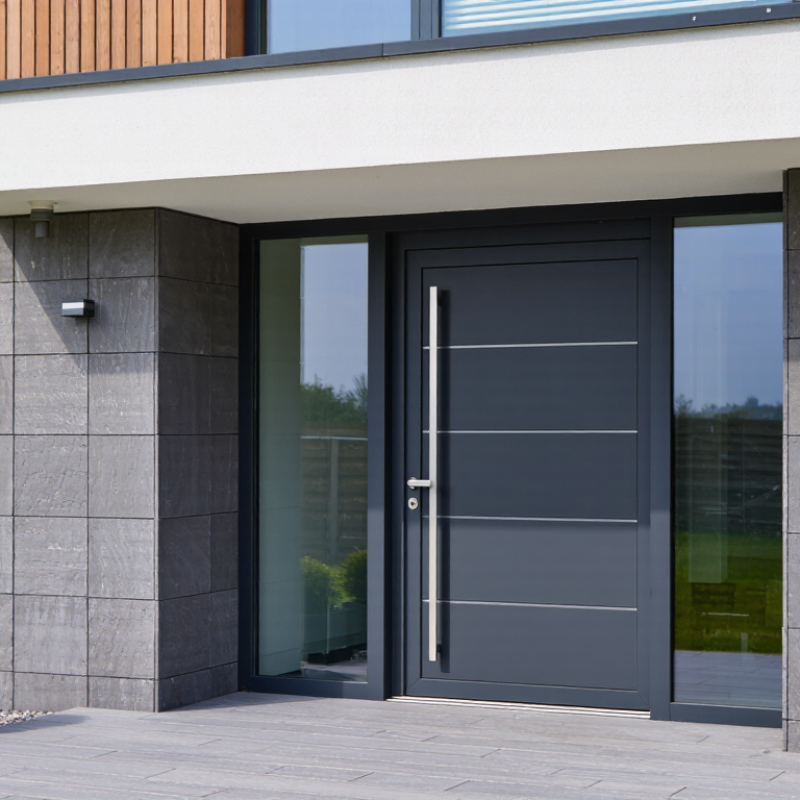
10 Best Aluminium Front Doors for Global Buyers?

Aluminium Front Door Types for Different Architectural Needs

Aluminium front doors suit many architectural styles, from compact urban homes to wide modern entrances. A thermally broken hinged door works well in cold or hot climates. Its insulated core reduces heat transfer while keeping the profile slim. For dramatic entrances, a pivot door creates a broad opening and strong visual balance. It needs careful structural planning, especially with tall or heavy panels.

Glazed aluminium doors bring daylight into dark hallways. Choose laminated or low-emissivity glass when privacy, safety, or energy performance matters. A flush door offers a quiet, minimal appearance for contemporary facades. Textured powder finishes can support coastal, industrial, or traditional designs, but color samples may look different outdoors. Do not trust a small sample completely. Weather exposure changes perception.

Tips: Measure the wall opening, threshold height, and swing clearance before ordering. Ask for air, water, thermal, and hardware performance data. In windy or rainy regions, drainage details matter as much as the frame. Consider wheelchair access and daily traffic patterns. A large handle may look attractive, yet it can feel awkward for children or older users. Local installation quality also affects security and sealing. I have seen impressive door designs fail because the threshold was poorly fitted. A slightly simpler system may perform better.

Key Features of the 10 Best Aluminium Front Door Designs

The 10 best aluminium front door designs combine durability, security, and clear architectural character. In my project experience, slimline hinged doors suit compact entrances, while pivot doors create a stronger visual statement. Thermally broken frames help reduce heat transfer in cold and hot regions. This detail matters more than appearance alone.

Full-height glazed doors bring daylight into dark hallways. Choose laminated or tempered glass for added safety. Solid panel designs offer privacy and a quieter entrance. Slatted aluminium doors improve airflow, but they may need careful cleaning. Flush doors create a modern surface with fewer dust-catching edges. Arched, double, side-panel, and recessed-handle designs provide different proportions for traditional and contemporary homes. A bold choice.

Reliable designs usually include multi-point locking, adjustable hinges, weather seals, and a well-drained threshold. Powder-coated finishes resist fading, although coastal air can still challenge cheaper coatings. Ask about coating thickness, warranty terms, and local installation experience. Measurements should include wall opening, floor levels, swing clearance, and drainage direction. A beautiful door can perform poorly when fitted out of square.

Global buyers should also check thermal values, glass specifications, wind exposure, and accessibility needs. Hardware must match the local climate. Dark finishes can become very hot under direct sunlight. I once underestimated this effect on a west-facing entrance. The result was attractive, but the handle became uncomfortable by afternoon. Design choices deserve practical testing, not only catalogue approval.

10 Best Aluminium Front Doors for Global Buyers? - Key Features of the 10 Best Aluminium Front Door Designs

A practical comparison of widely used aluminium entrance-door configurations for residential and light commercial projects

Rank Aluminium Front Door Design Typical Door Configuration Common Frame Depth Typical Thermal Transmittance Glazing or Panel Option Security Features Weather and Energy Features Best Use
1 Thermally Broken Flush Panel Door Single-leaf outward- or inward-opening door with a smooth insulated aluminium panel 75–90 mm Approximately 0.8–1.2 W/m²K Insulated panel with optional narrow vision panel Multipoint lock, reinforced hinges, adjustable compression seals and laminated safety glass when glazed Thermal break, insulated core, perimeter gaskets and powder-coated or anodized surface Energy-conscious houses and contemporary entrances
2 Full-Height Glass Aluminium Door Single or double leaf with a slim aluminium perimeter frame and large glazed area 70–90 mm Approximately 1.0–1.5 W/m²K Double or triple insulating glass; low-emissivity coating and argon filling are common Multipoint locking system, laminated inner pane and concealed or heavy-duty hinges Low-E glazing, thermally separated frame and drainage channels help reduce heat loss and water entry Modern homes, apartments and entrances requiring maximum daylight
3 Pivot Aluminium Entrance Door Large-format single door rotating on floor and head pivot hardware rather than side hinges 90–120 mm Approximately 1.0–1.6 W/m²K Oversized insulated panel, decorative metal finish or large insulated glass insert Heavy-duty pivot set, concealed locking points, anti-lift protection and reinforced frame Suitable for thick door leaves; threshold drainage and continuous seals are important for exposure control Architectural residences and wide, statement-making entrances
4 Double Aluminium French Door Pair of hinged leaves opening from the centre, with one active leaf and one secondary leaf 70–90 mm Approximately 1.1–1.7 W/m²K Insulating glass, glazed panels or a combination of glass and solid panels Multipoint lock on the active leaf, shoot bolts on the secondary leaf and security hinges Meeting stile seals, adjustable threshold and thermally broken profiles improve air and water resistance Traditional, transitional and larger residential entrances
5 Side-Panel Aluminium Door Set Single entrance door combined with one fixed glazed or insulated side panel 75–100 mm Approximately 0.9–1.5 W/m²K Double or triple glazing in the side panel with optional decorative or privacy glass Multipoint lock, laminated safety glazing and reinforced mullion between the door and side panel Continuous sill, thermal breaks and sealed junctions reduce drafts around the complete entrance set Hallways requiring additional daylight and a wider visual entrance
6 Textured or Wood-Effect Aluminium Door Insulated aluminium door with a printed or textured finish designed to resemble timber 75–90 mm Approximately 0.9–1.4 W/m²K Solid insulated panel, vertical glass strip or decorative glazing Multipoint lock, security cylinder, reinforced lock area and adjustable hinges Aluminium resists rot and insect damage; durable surface finishes require less maintenance than timber Projects seeking a warm appearance with low exterior maintenance
7 Minimalist Narrow-Frame Door Single-leaf door using visually slim aluminium profiles to maximize the glass-to-frame ratio 70–85 mm Approximately 1.1–1.7 W/m²K Large double glazing or triple glazing with low-E coating Concealed hinges, multipoint lock and laminated or toughened safety glass Thermally broken frame, compression seals and carefully designed threshold are essential for performance Contemporary façades where clean lines and daylight are priorities
8 Solid Security Aluminium Door Heavy-duty single-leaf door with a predominantly opaque insulated panel 80–100 mm Approximately 1.0–1.5 W/m²K Solid insulated panel or small laminated safety-glass opening Multipoint locking, security cylinder, hinge-side protection, reinforced strike plate and optional access control Strong insulated construction, compression gaskets and robust threshold for exposed locations Urban homes, apartment entrances and properties prioritizing privacy
9 Accessible Low-Threshold Aluminium Door Single or double hinged door designed for easier wheelchair, stroller and mobility-aid access 70–90 mm Approximately 1.1–1.7 W/m²K Insulating glass, solid panel or mixed panel-and-glass layout Multipoint lock with low operating force, lever handle and wide clear opening Low or flush threshold, weather-rated drainage design and continuous perimeter seals Accessible homes, public-facing residential buildings and renovation projects
10 Smart-Ready Aluminium Front Door Thermally broken hinged door prepared for electronic locking and connected access systems 75–100 mm Approximately 0.9–1.5 W/m²K Insulated panel, decorative glazing or laminated low-E glass Motorized multipoint lock, keypad, RFID, biometric reader or mechanical backup depending on system design Protected cable routing, sealed lock preparation and weather-resistant external components are required Smart homes, rental properties and projects needing keyless access management
Data note: Thermal values are typical indicative ranges for complete door assemblies. Actual performance depends on door size, profile design, glazing, threshold, hardware, installation quality and local testing standards. Security and weather performance should be verified against the requirements of the destination country.

How to Compare Energy Efficiency, Security, and Durability

For global buyers, an aluminium front door should be judged by performance, not appearance alone. Energy efficiency begins with the frame. Look for a genuine thermal break, insulated panels, low-emissivity double glazing, and continuous compression seals. Ask for tested U-values and air-leakage results, not vague claims such as “eco-friendly.” In a cold city, a cold interior handle can reveal weak insulation. In a hot, humid region, poor seals may invite condensation around the reveal. Small details matter.

Security needs more than a thick-looking panel. Check the lock system, hinge protection, laminated or toughened glass, multi-point engagement, and independent resistance testing. The cylinder should resist common physical attacks. The frame must be anchored into sound masonry or engineered structure. Installation is often overlooked. A strong door fitted badly is only an expensive invitation. Ask for maintenance instructions and evidence that local installers understand the wall construction.

Durability depends on coating quality, drainage, hardware, and climate exposure. For coastal homes, specify corrosion-resistant components and inspect the finish for salt damage. For intense sunlight, confirm coating suitability and colour stability. A door that opens smoothly after thousands of cycles is more useful than a dramatic showroom sample. Compare warranty terms carefully, including exclusions for condensation, coastal air, and incorrect installation. No checklist is perfect. A high price is not proof of quality, and a low U-value cannot excuse weak security. Request full test reports and compare the complete installed system, not the aluminium panel alone.

Choosing the Right Finish, Glass, Hardware, and Door Configuration

For global buyers, an aluminium front door should be judged beyond its appearance. The finish must suit local weather, cleaning habits, and surrounding materials. Powder-coated surfaces usually provide consistent colour and strong resistance to moisture and sunlight. Dark finishes look refined, but they can reveal dust, scratches, and heat more clearly. Samples matter. View them outdoors before ordering, because indoor lighting can mislead the eye.

Glass affects privacy, comfort, and the entrance’s visual weight. Clear glass brings daylight, while frosted or textured glass offers privacy near busy streets. Low-emissivity glass can support indoor comfort, especially on sun-facing elevations. Laminated or toughened options may improve impact resistance, subject to local requirements. Ask for verified thermal and safety information, not vague sales language. I prefer seeing the glass beside the actual frame colour. Small differences become obvious there.

Hardware should feel solid, operate smoothly, and resist corrosion in coastal or humid areas. Check the handle height, lock position, hinges, and threshold before selecting a configuration. A single door suits tighter entrances, while double doors need careful alignment and stronger support. Sidelights add daylight but may reduce privacy. Wide doors can look impressive, yet they often demand more clearance and adjustment. I have seen elegant designs become awkward when furniture blocks the opening. Recheck the swing direction, drainage detail, and installation tolerances. Some choices look perfect in drawings. They may feel less practical at home.

Installation, Maintenance, and Global Buying Considerations

10 Best Aluminium Front Doors for Global Buyers: Installation, Maintenance, and Global Buying Considerations

A credible shortlist of ten aluminium front doors should begin with installation quality, not appearance. Thermal-break frames reduce heat transfer, while insulated panels and low-emissivity glazing improve comfort. Ask for the whole-door U-value, not the glass value alone. The International Energy Agency reports that buildings use about 30% of global final energy, making air leakage worth checking carefully. Installers should measure the opening at several points, verify square alignment, and seal the threshold against wind-driven rain. Small errors cause large problems.

Maintenance is simple, but not optional. Clean frames with mild soap and fresh water every few months. Coastal properties may need monthly rinsing because salt deposits accelerate corrosion. Check gaskets, hinges, locks, and drainage channels twice yearly. A blocked channel can send water behind the frame. It happens. Powder-coated surfaces should not be scrubbed with abrasive tools. Replacing worn seals early is usually cheaper than repairing damaged finishes or interior flooring.

Global buyers should confirm swing direction, threshold height, wind-load performance, glazing safety, and local accessibility requirements. Request installation drawings, packaging dimensions, spare-part availability, and clear warranty terms before payment. Climate matters too: humid regions need stronger drainage, while cold regions benefit from insulated thresholds. The International Aluminium Institute states that recycled aluminium requires roughly 5% of the energy used for primary aluminium. That supports responsible material choices, although recycled content alone does not guarantee a durable door. A perfect specification does not exist; performance depends on the product, installer, and building conditions.

FAQS

Which aluminium front door suits a cold or hot climate?

A thermally broken hinged door can reduce heat transfer. Its insulated core keeps the profile relatively slim. Local testing still matters.

When is a pivot door a practical choice?

A pivot door creates a wide, dramatic opening. Tall or heavy panels need careful structural planning. It may be impressive, but not always practical.

What glass should I choose for privacy and comfort?

Frosted or textured glass limits views from busy streets. Low-emissivity glass can improve comfort on sunny elevations. Laminated or toughened glass may improve impact resistance.

How can I choose a suitable door finish?

View colour samples outdoors before ordering. Indoor lighting can mislead you. Dark finishes show dust, scratches, and heat more clearly.

What measurements should be checked before ordering?

Measure the wall opening, threshold height, and swing clearance. Check furniture positions, too. Drawings can hide daily problems.

Should I choose a single door, double door, or sidelights?

A single door suits tighter entrances. Double doors need stronger support and careful alignment. Sidelights add daylight but may reduce privacy.

What hardware details are important?

The handle should feel solid and operate smoothly. Check handle height, lock position, hinges, and corrosion resistance. Large handles can feel awkward for children.

Why do drainage and installation quality matter?

Good drainage helps in windy or rainy regions. A poorly fitted threshold can damage sealing and security. A simpler system may perform better.

Conclusion

Choosing the right Aluminium Front Door can enhance a building’s appearance, comfort, security, and long-term value. This guide explores ten versatile designs suited to modern, traditional, minimalist, and high-traffic architectural styles. It explains how to compare thermal insulation, weather resistance, locking performance, structural strength, and expected lifespan. Readers will also learn how panel layouts, glazing options, surface finishes, handles, hinges, sidelights, and opening configurations can be matched to climate, privacy needs, accessibility, and personal taste.

The guide also highlights practical considerations for global buyers, including accurate measurements, delivery planning, local installation requirements, warranty terms, and after-sales support. Clear advice on professional installation and routine maintenance helps preserve the door’s appearance and performance over time. By evaluating design, energy efficiency, durability, security, customization, and total ownership costs together, buyers can select an Aluminium Front Door that offers dependable protection and attractive performance across a wide range of residential and commercial projects.

Charlotte

Charlotte

Charlotte is a professional marketing specialist dedicated to helping businesses understand products, market trends, and practical solutions that support sustainable growth. With extensive knowledge of the company’s offerings, she combines product expertise, customer insight, and clear......